
Basement Waterproofing & Perimeter Drains · Ashburn, VA
Wet Basement in Ashburn, VA? Waterproofing Fixes Matched to the Cause
A basement that takes water after heavy rain is usually telling you about drainage rather than plumbing. The water is arriving from outside the house, not from a pipe inside it.
Working out which of the two you have is the first thing worth doing, because the fixes have nothing in common.
Rain-driven or pipe-driven, and how to tell
The useful diagnostic costs nothing and takes one wet week of paying attention.
| What you observe | What it points to |
|---|---|
| Water appears only after heavy or prolonged rain | Surface or ground water from outside |
| Water appears regardless of weather | A supply or waste line inside |
| Damp at the wall and floor joint, in a line | Hydrostatic pressure at the footing |
| A single wet patch mid-wall or mid-floor | More likely a pipe, worth leak detection |
| Damp that worsens when a fixture runs upstairs | A waste line |
If it is the fourth or fifth row, this is not the right page: that is leak detection work. If it is the first or third, read on.
Where water around an Ashburn foundation actually goes
The USDA recognizes a soil series named after this town, mapped from a type location within the county. It occupies interfluves in the Culpeper Basin and forms from reworked alluvium sitting over weathered red sedimentary rock: siltstone, fine sandstone and shale.
It is classed as moderately well drained. Water moves through it, but not quickly, and shallow soil over sedimentary rock means there is a limit to how far down it can go before it starts moving sideways.
Ashburn takes roughly 34.7 inches of rain a year, with May the wettest month at about 3.6 inches. Stormwater in the area drains toward Broad Run, Russell Branch and Beaverdam Run, and the ground between your foundation and those watercourses is doing the work in between.
None of that causes a basement to leak on its own. What it explains is why water can sit against a foundation here for longer after a wet spell than it would on sandier ground.
Fix drainage outside first: it solves most basement water
Most basement water problems are solved outside the house, and that work is a fraction of the cost of the interior equivalent. It is worth exhausting before anyone cuts a floor.
What we check outside
- Ground slope within six feet of the wall, which should fall away from the house rather than toward it
- Downspout discharge, which often ends within a foot of the foundation and should be carried well clear
- Gutter capacity and blockages, since an overflowing gutter concentrates roof water exactly where you least want it
- Window wells, their drains, and whether they hold water after rain, since a silted well drain is ordinary drain clearing work rather than a waterproofing job
- Hardscaping and patios that have settled back toward the house
- Planting beds built up above the damp course line
A surprising share of basements stop taking water once the downspouts discharge ten feet away and the grading is corrected.
Inside: perimeter drains and vapor barriers
Where the outside work is already right and water still arrives, the remaining options are interior.
An interior perimeter drain is a channel cut into the floor slab at the wall junction, collecting water that arrives at the footing and carrying it to a discharge point. It manages water rather than stopping it, which is the honest description.
A wall vapor barrier directs water that comes through the wall itself down into that channel instead of across the floor. The two are normally installed together.
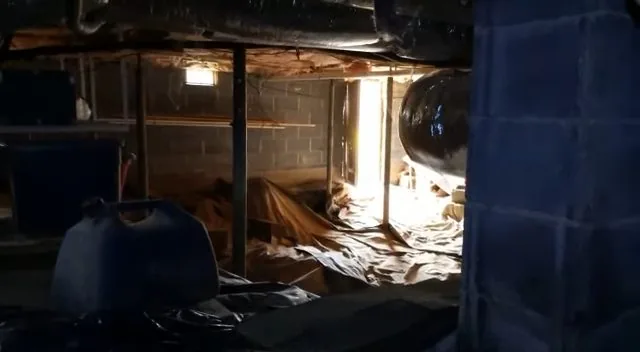
This is disruptive work. It involves breaking out a strip of floor around the perimeter, and it is worth being certain the exterior causes have been dealt with before committing to it.
What this service does not include
Two things sit outside our scope here and it is better to say so plainly than to let you find out later.
We do not supply or install sump pumps. That is an excluded service for this business, so if a drainage design depends on one, you will need a contractor who offers it. We will tell you that at the assessment rather than at the quote.
We also do not carry out structural foundation repair. Cracking that is moving, or a wall that is bowing, is a structural engineering question first and a water question second, and it needs the right trade in the right order.
What this work costs in Ashburn
There is no published range for basement drainage on our cost page, because the spread between a downspout extension and a full interior perimeter system is too wide for a single figure to be useful.
What the price actually depends on
- Whether the fix is exterior grading and drainage or interior excavation
- Linear footage of wall treated
- Whether the basement is finished, since finishes have to come off and are not reinstated by us
- Access for removing spoil, which on a walk-out basement is easy and on an interior stair is not
- Where the collected water can legally and practically discharge
You get a range at the assessment, before any work is scheduled. If the answer is that exterior work will probably solve it, we will say that instead of quoting the larger job.
Basement water questions in Ashburn
My basement takes water after heavy rain. Is that a plumbing problem?
Usually not. If the water follows rainfall rather than water use, it is arriving from outside the house rather than from a pipe inside it, and the fix is drainage rather than plumbing.
The distinction is worth making before anyone quotes you, because the two have nothing in common. Water that appears regardless of weather, or that worsens when a fixture runs upstairs, points at a pipe and belongs with leak detection instead.
Ashburn sits on moderately well drained ground formed over red Triassic siltstone and shale, taking roughly 34.7 inches of rain a year. Water moves through that ground but not quickly, which is why it can sit against a foundation here longer than it would on sandier soil.
Where does water around an Ashburn foundation actually go?
Down as far as the soil lets it, then sideways. The soil series named for this area has its type location in Loudoun County and sits on interfluves in the Culpeper Basin, formed from reworked alluvium over red Triassic siltstone, fine-grained sandstone and shale.
Shallow soil over sedimentary rock means there is a limit to how far down water can travel before it starts moving laterally, and if your foundation is in its path it becomes your problem. Stormwater in the area drains toward Broad Run, Russell Branch and Beaverdam Run.
None of that makes a basement leak on its own. It explains why getting the first six feet around the house right matters more here than people expect.
What can be done about basement water without a sump pump?
Quite a lot, and most of it is outside the house. Correcting ground slope so it falls away from the wall, carrying downspout discharge well clear rather than dropping it at the foundation, clearing gutters, and fixing window wells that hold water solve a surprising share of cases on their own.
Where the exterior work is already right and water still arrives, an interior perimeter drain with a wall vapor barrier manages it: a channel at the wall and floor junction collects water arriving at the footing and carries it to a discharge point.
To be straightforward about scope, we do not supply or install sump pumps. If a drainage design depends on one, you will need a contractor who offers them, and we will tell you that at the assessment rather than at the quote.
What makes an interior drainage job cost more than expected?
No figure is published for this one. Extending a downspout and fitting a full interior perimeter system sit so far apart that a single number would mislead more than it helped.
What moves it: whether the fix is exterior or interior, the linear footage of wall treated, and whether the basement is finished, since finishes have to come off and we do not reinstate them. Access for removing spoil matters too, as does where the collected water can legally and practically discharge.
You get a range at the assessment, before anything is scheduled. If exterior work will probably solve it, we say that rather than quoting the larger job.
Is waterproofing work permitted and inspected like plumbing?
It sits differently. Loudoun County issues plumbing and gas trade permits for work on those systems, and interior drainage work is not straightforwardly one of those, so whether a permit applies depends on the specific scope.
The honest answer is to confirm with Loudoun County Building and Development on 703-777-0220 for your particular job rather than take a blanket yes or no from a contractor, including us.
What does apply regardless is contractor licensing: a Virginia State Contractors License and a Loudoun County business license are required either way, and both are worth checking before work starts.
Basement wet after it rains?
Note whether the water follows rainfall or appears regardless of weather. That single observation separates a drainage problem from a plumbing one before anyone visits.