
Sterling · Loudoun County
Emergency Plumber in Sterling, VA: Sixty-Year-Old Laterals, Cast Iron and Leaks
Sterling has the oldest housing anywhere in this service area, and that single fact changes what goes wrong. A house from the first phase has had sixty years of service out of pipe that was never meant to last indefinitely.
What it does not have is polybutylene, whatever you may have read about Northern Virginia.
Sterling Park's first homes of 1963 and their aging pipe
Loudoun County's Board of Supervisors approved the Sterling Park planned community on 21 June 1961, by three votes to two. The developers assembled 1,762 acres across 14 parcels that year, and the first homes sold on 14 February 1963 at prices between $14,800 and $22,500.
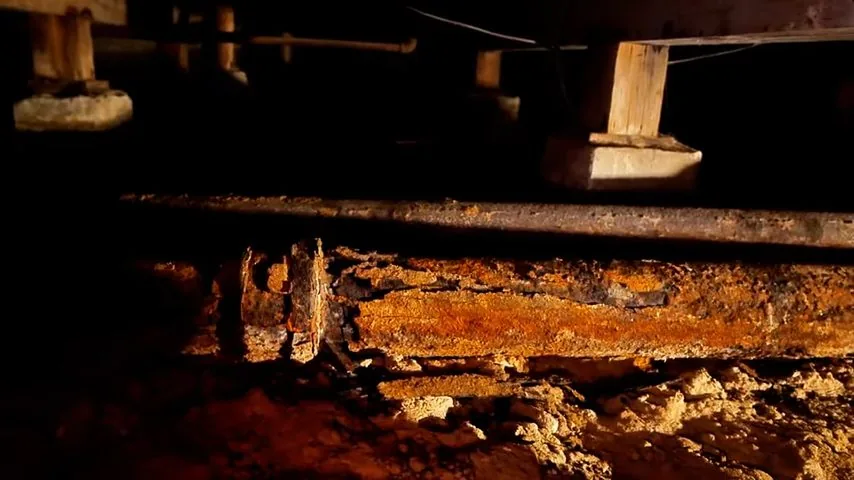
A house of that vintage was plumbed before plastic supply pipe was in general residential use. What it was built with instead is copper on the supply side, galvanized steel in some runs, and cast iron for waste and vent stacks.
None of those materials fail the way polybutylene does. They fail slowly and they give warning, which is genuinely better news. It also means the problems arrive as a sequence of small repairs rather than one sudden flood.
Why the polybutylene story does not apply to Sterling Park
P
o
l
y
b
u
t
y
l
e
n
e
w
e
n
t
i
n
t
o
h
o
m
e
s
b
u
i
l
t
r
o
u
g
h
l
y
1
9
7
8
t
o
t
h
e
m
i
d
d
l
e
o
f
1
9
9
5
.
S
t
e
r
l
i
n
g
P
a
r
k
p
r
e
d
a
t
e
s
t
h
a
t
w
i
n
d
o
w
b
y
f
i
f
t
e
e
n
y
e
a
r
s
.
I
f
s
o
m
e
b
o
d
y
t
e
l
l
s
y
o
u
a
n
o
r
i
g
i
n
a
l
S
t
e
r
l
i
n
g
P
a
r
k
h
o
u
s
e
n
e
e
d
s
a
p
o
l
y
b
u
t
y
l
e
n
e
r
e
p
i
p
e
,
a
s
k
t
h
e
m
t
o
s
h
o
w
y
o
u
t
h
e
p
i
p
e
,
b
e
c
a
u
s
e
t
h
e
d
a
t
e
s
d
o
n
o
t
l
i
n
e
u
p
.
Sterling is not one housing era
The complication is that Sterling the postal address is much larger than Sterling Park the 1960s community. Its footprint runs across three ZIPs: 20164, 20165 for Potomac Falls, and 20166 covering Arcola and the Dulles side.
Sterling Boulevard is a useful landmark for this, because it is the through road the original developers cut for the community. Streets running off it belong to the first phase; a good deal of what carries a Sterling address sits well away from it and went up decades later.
Those later areas were built out well after the original phase, so a Sterling address on its own tells you very little about the plumbing. The era of your particular street decides the material, and the two can sit two miles apart.
What to establish before assuming anything
- Roughly when the house was built, which the county assessment record will give you
- Whether the supply pipe at the water heater is copper, galvanized steel or plastic
- If it is plastic, whether it is gray and stamped PB or flexible and brightly colored, which is PEX and not a problem
- Whether the waste stack in the basement is cast iron or plastic
Five minutes with a flashlight settles most of this. Where it turns out to be gray plastic stamped PB after all, whole-house repiping is the conversation, and that page covers the material properly.
Sterling's population was 27,822 in 2010 and 30,337 in 2020, a rise of nine percent. Much of that growth is on the newer side of town, which is why the two halves of Sterling generate noticeably different call types.
Sixty-year-old sewer laterals
The sewer lateral is the part of an older Sterling house most likely to surprise its owner. It is the pipe nobody has looked at since it went in, and on an original-phase house that was around 1963.
Pipe of that era was commonly clay or cast iron below ground. Both fail by the joints opening, which lets roots in, and both lose their fall as the ground settles around them over decades.
Signs the lateral rather than a fixture is the problem
- More than one fixture draining slowly in the same week
- A toilet that bubbles when the washing machine empties
- Backup appearing at the lowest drain in the house
- Repeat clearing on a line that was cleared not long ago
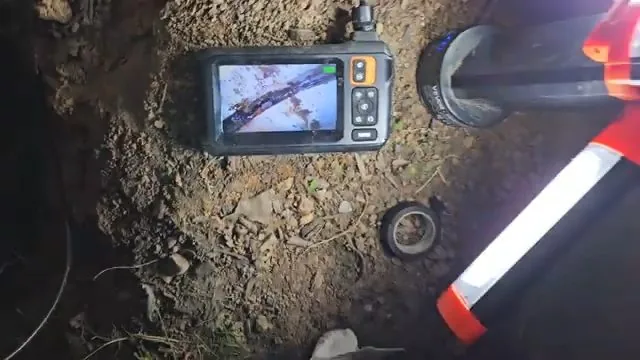
A camera run gives a distance reading to whatever it finds, which is what decides between a spot repair and a full replacement. Sewer line repair covers how that decision is made, including where the responsibility boundary falls.
Galvanized supply, and how it corrodes from inside
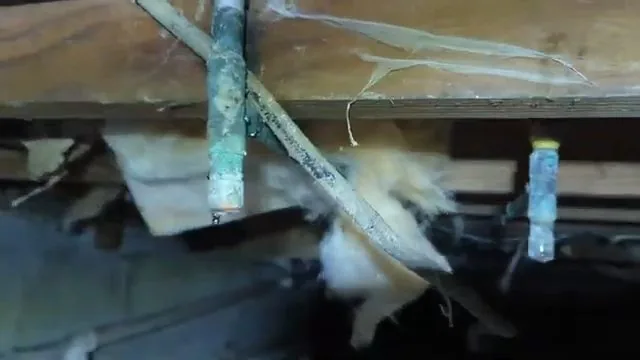
Galvanized steel pipe rusts inward. The zinc coating goes first, then the steel beneath it corrodes and the bore narrows with scale until the flow is a fraction of what the pipe was sized for.
| What you notice | What is happening | What helps |
|---|---|---|
| Pressure drops when a second tap opens | The usable bore has narrowed across a long run | Replacing the run; cleaning it is not durable |
| Rusty water after the house has sat unused | Scale and corrosion product sitting in the pipe | Running it off tells you how far the problem goes |
| Hot side noticeably worse than cold | Heat accelerates the same corrosion | Usually the hot runs are replaced first |
| A repair at one joint followed by another nearby | The whole run has reached the same condition | Replacing the run rather than chasing joints |
The practical point is that galvanized failures cluster. A second leak near the first is not bad luck, it is the rest of the run telling you where it is in its life.
Cast iron waste stacks in the original blocks
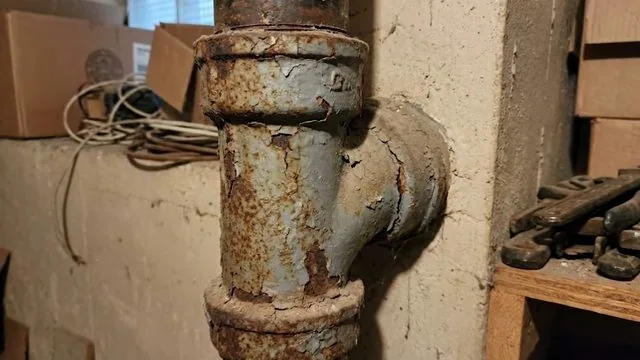
Cast iron was the standard for waste and vent in houses of this period, and a great deal of it is still in service and working. It is heavy, quiet, and lasts a long time.
What it does eventually do is corrode along the bottom of horizontal runs, where waste sits against the pipe wall. That shows as a rough interior on camera, then as weeping at a joint, then as a section that needs cutting out and replacing in plastic.
Replacing a stack section is disruptive because of where stacks run, but it is a section repair rather than a whole-house job in most cases. The camera decides which.
The permit route is the same as Ashburn's
Sterling sits in Loudoun County, so the process is identical to the one that applies at home. Water is Loudoun Water, and permits go through the Loudoun County Department of Building and Development on Harrison Street in Leesburg.
A contractor working here needs the Virginia state trade license and a Loudoun County business license. DPOR publishes the first of those on a public register, which takes a minute to check and is worth doing while you are still choosing.
That consistency matters more than it sounds on an older house, because replacing a run or a stack section is permitted work and the inspection is the only independent check it will ever get.
How far Sterling is from Ashburn
Sterling is about 4.1 miles from central Ashburn and sits in Loudoun County, so the county permit office is the same one that serves Ashburn. Use the map to see where your street falls, then call with the address.
Sterling plumbing questions
Does an original Sterling Park house have polybutylene?
No. The polybutylene era ran from about 1978 to the middle of 1995, and the first Sterling Park homes sold on 14 February 1963. The dates are fifteen years apart.
What a house of that era has instead is copper on the supply side, galvanized steel in some runs, and cast iron for waste and vent. Those materials fail slowly and give warning, which is better news than polybutylene gives anyone.
The caveat is that Sterling the postal address covers much more than Sterling Park. Later development under 20165 and 20166 can fall inside the polybutylene window, so the era of your own street is what matters rather than the town name.
My water pressure drops as soon as a second tap opens. Why?
On an older Sterling house that usually points at galvanized steel supply pipe. It corrodes inward: the zinc goes first, then the steel, and scale narrows the bore until the pipe carries a fraction of what it was sized for.
One tap can still manage. Two at once exceeds what the narrowed run can deliver, which is why the symptom shows up as soon as there is competition for the flow.
Cleaning it out is not a durable fix, because the pipe wall itself has gone. Replacing the affected run is, and the hot runs usually go first because heat speeds the same corrosion.
How old is the sewer line under an original Sterling house?
About as old as the house, so roughly sixty years on the first phase. It is the part of the plumbing nobody has looked at since it was installed.
Pipe of that era below ground was commonly clay or cast iron. Both fail by the joints opening, which lets roots in, and both tend to lose their fall as the ground settles around them over decades.
A camera run gives a distance reading to whatever it finds, which is what separates a single spot repair from a full replacement. It also establishes whether the fault is even on your side of the property boundary.
Is the cast iron waste stack something to worry about?
Usually not yet. Cast iron lasts a long time and a great deal of it in Sterling is still doing its job quietly.
What it eventually does is corrode along the bottom of horizontal runs, where waste sits against the pipe wall. That shows as a rough interior on camera, then weeping at a joint, then a section that needs cutting out and replacing in plastic.
It is normally a section repair rather than a whole-house job. The disruption comes from where stacks run rather than from the amount of pipe involved.
Is the permit process different in Sterling than in Ashburn?
No, and that is unusual for this area. Sterling is in Loudoun County, so it is the same route: Loudoun Water for the utility, and permits through the Loudoun County Department of Building and Development in Leesburg.
A contractor working here needs the Virginia state trade license plus a Loudoun County business license. The state one appears on DPOR's public register, so you can confirm it yourself in about a minute.
Worth knowing because the neighboring town of Herndon is in Fairfax County and runs an entirely different process. Sterling does not.
Something failing in an older Sterling house?
Tell us roughly when the house was built and which part of Sterling it is in. Those two answers narrow the likely material before anyone arrives, which is most of the diagnosis on a house this age.