
FAQs · Ashburn, Loudoun County
Plumbing Questions Ashburn Homeowners Ask
Each answer starts with the short version, then explains what sits behind it.
Questions about one particular job are also answered in more depth on that service's own page, which each answer links to.
Jump to a question
- What should I do immediately during a plumbing emergency in Ashburn?
- How do I prevent my plumbing pipes from freezing during Ashburn cold snaps?
- How long do standard water heaters last in Ashburn VA?
- Does a water heater replacement in Ashburn need a county permit?
- How often should residential drains be professionally cleaned or jetted?
- What are the most common signs of a hidden slab leak in Ashburn homes?
- When is trenchless pipe lining (CIPP) recommended over traditional sewer excavation?
- Why does my toilet periodically run on its own without being flushed?
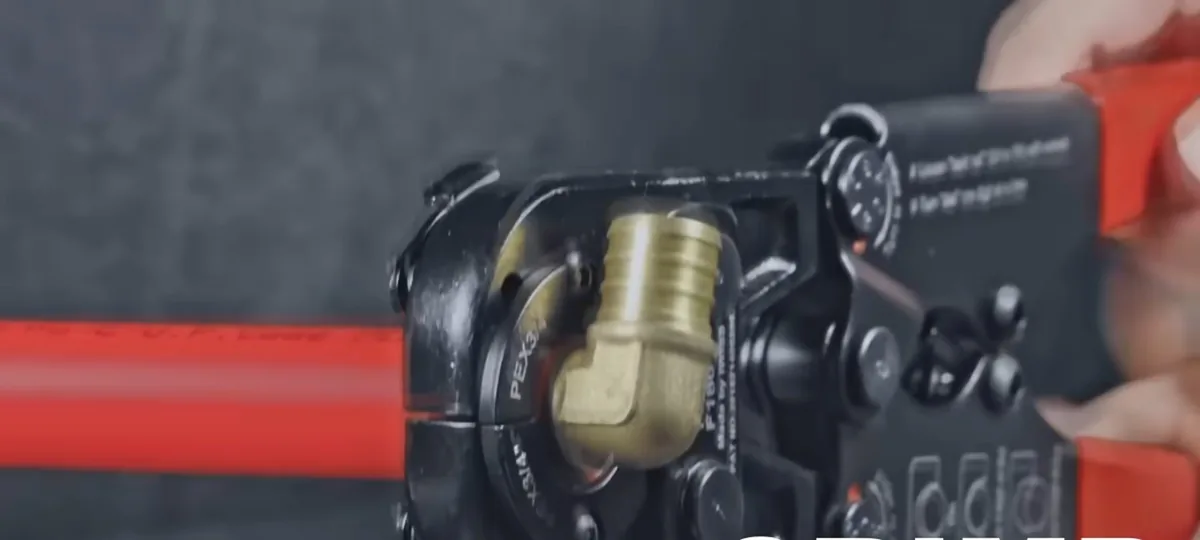
What should I do immediately during a plumbing emergency in Ashburn?
Stop the water first. Close the main shutoff valve, then call. Cleanup, photos and phone calls to your insurer can wait until the water has stopped.
The main shutoff is usually on the wall where the supply pipe enters the house, often in the basement or utility room near the water heater. A round wheel closes by turning clockwise. A lever closes when it sits crosswise to the pipe.
The first 60 seconds
- Close the main shutoff, or the small valve under the fixture if only one fixture is involved.
- Keep clear of outlets, the electrical panel and any appliance standing in water.
- Open the lowest cold tap to drain what is left in the pipes and slow the flow from the break.
- If you smell gas, leave the house and call 911 or the gas utility from outside. Do not touch switches.
- Photograph the damage for your insurer, then move belongings out of the wet area.
A sewage backup is different. Stop running water in the house and leave the drains alone until someone has looked at the line.
When you call, give the address, what you can see, and whether the water is off. That tells us what to bring, and we give a price range on the phone rather than a surprise afterward.
The version of this question about which valve to close is on the emergency plumbing guide. If a pipe has already split, burst pipe repair covers what the repair involves.
How do I prevent my plumbing pipes from freezing during Ashburn cold snaps?
Keep pipes on exterior walls, in garages and in crawlspaces from getting cold, disconnect outdoor hoses before the first hard freeze, and leave a faucet dripping on the coldest nights.
Ashburn's cold season runs from about 30 November to 4 March, and the average January low is 27°F. Freezing nights are routine here. What splits a pipe is a night well below that average, when a run along an outside wall has no heat reaching it.
Before winter
- Disconnect garden hoses and drain the outdoor faucets. If an indoor valve feeds the faucet, close it and leave the outdoor one open.
- Insulate supply lines in the garage, the crawlspace and any wall that faces north.
- Seal gaps where cables and pipes pass through the outside wall, since cold air at one spot is enough.
- Find your main shutoff now, so that a burst in January is a two-minute problem.
During a hard freeze
- Open the cabinet doors under sinks on outside walls so house air reaches the pipes.
- Leave a thin stream running at the faucet farthest from the main.
- Keep the heat on. If you are away, set it no lower than 55°F.
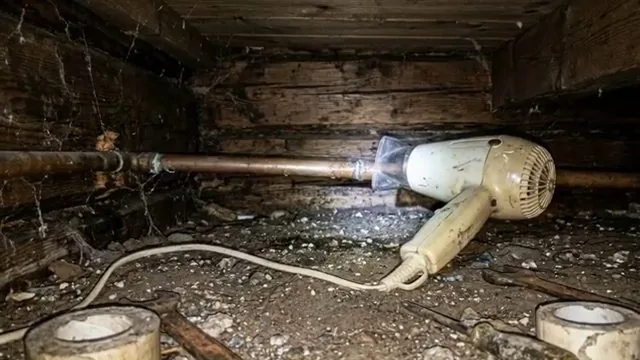
If a pipe has already frozen, close the main and open the faucet. Warm the pipe gently with a hair dryer or warm towels, never an open flame. If it has cracked, water will appear as it thaws, which is the moment to call.
How long do standard water heaters last in Ashburn VA?
A standard tank water heater usually lasts 8 to 12 years. Expect the shorter end if it has never been flushed, because Ashburn's water is moderately hard to hard and scale builds up inside the tank.
Loudoun Water publishes a hardness range of 4.9 to 9.9 grains per gallon, which it classes as moderately hard to hard. The figure comes from a 2011 customer guide, so treat it as the utility's stated range rather than a current measurement for your street.
Scale settles on the bottom of a tank and on the burner or element, so the heater works harder for the same hot water. A yearly flush of the tank slows that. Tankless units last longer, commonly around 20 years, but they need descaling on the same hard-water logic.
Signs a tank is near the end
- The unit is older than 10 years. The rating plate carries a manufacture date, often coded in the serial number.
- Rust-colored hot water, or a rumbling and popping noise as it heats.
- Moisture at the base. A weeping seam in the tank cannot be repaired.
- A second repair within a year or two of the first.
Most Ashburn homes were built between the late 1980s and the 2000s, so original heaters have mostly been replaced already. The one in your house is likelier to be the second or third. Whether to repair or replace is covered on repairing a water heater and installing a new water heater, and the longer-lived option is on tankless water heater options.
Does a water heater replacement in Ashburn need a county permit?
Loudoun County issues a Plumbing Permit for residential plumbing work, and a water heater replacement is normally handled as permitted work that the contractor arranges. The county's public page does not spell out the like-for-like case, so confirm your own job with the county.
The county lists the Plumbing Permit as a residential trade permit, with its own application. Contractors must hold a valid Virginia State Contractors License and a Loudoun County Business License. Permits are filed online through the county's LandMARC system or in person at the Government Center in Leesburg.
A gas-fired heater adds a gas permit, and the county says plan review applies to some residential fuel gas permits from 1 October 2025. Electric and gas jobs can therefore take different amounts of time.
What to check before work starts
- Ask the contractor who pulls the permit. It should be the contractor, not you.
- Look up the license on the state license lookup before you book.
- Call the county's plan review line, 703-777-0220, between 8:30 a.m. and 4 p.m. on weekdays for your particular job.
Requirements change, and no contractor should be your only source on this, including us. The county's own permit information is the page to check.
Who pulls the permit and what the inspector looks at are on installation permits and inspections.
How often should residential drains be professionally cleaned or jetted?
Most households do not need a schedule. Clean a line when it has slowed or backed up more than once, and consider a regular visit only where there is a known cause such as kitchen grease or tree roots.
One slow sink is usually a local clog in that fixture's own trap or branch. Several drains slowing together, or a gurgle when the washer empties, points at the main line, and that is where a regular interval can make sense.
Reasons to clean sooner than you planned
- A drain has backed up twice in the same year.
- A kitchen line carries heavy cooking grease, which rebuilds on the pipe wall.
- Mature trees stand near the sewer line, since roots find the joints.
- A camera look showed buildup or roots, even though the line still flows.
As a starting point, a line with a known cause is often cleaned every year or two, then adjusted by what the camera shows. A line with no history needs nothing on a calendar.
The pipe from your house to the edge of the public right of way is the homeowner's to maintain, according to Loudoun Water. That is the strongest reason to look inside it before deciding on a routine. Specific cases are on clearing slow drains, jetting a sewer line and backed-up sewer lines.
What are the most common signs of a hidden slab leak in Ashburn homes?
Water running when every fixture is off, a bill that climbed with no change in use, a floor that feels warm, and damp at the base of a wall. The meter's leak dial separates a leak from a fixture problem in about ten minutes.
Many Ashburn houses sit over a basement or a crawlspace rather than a poured slab, so a leak under the floor is often reached from below. The signs are the same either way, because the water is hidden until a good deal of it has escaped.
Signs worth acting on
- The sound of running water with every fixture closed.
- A patch of floor that is warm underfoot, which points at a hot-water line.
- A water bill that rose with no change in how the house is used.
- Flooring that lifts or cups, or damp at the base of a wall, with no spill to explain it.
Close every fixture, then watch the meter's small leak dial. If it moves, water is leaving the system. Close the main shutoff into the house and watch again: still moving means the loss is between the meter and the building.
How a concealed leak is located and repaired is on slab leak detection and repair, and finding water behind walls and ceilings is on leak detection.
When is trenchless pipe lining (CIPP) recommended over traditional sewer excavation?
When the sewer line is cracked, corroded or full of roots but still holds its shape and its slope. Excavation is the better call when the line has collapsed, holds water in a low spot, or has a joint offset too far for a liner to pass.
A liner is a resin-saturated tube cured inside the old pipe until it forms a new wall. It follows the existing grade exactly, so it preserves a fault in the slope rather than correcting it. The line is also cleaned and cameraed before and after, because resin will not bond to scale, grease or roots.
Lining is usually ruled out when
- The line has lost its slope and holds standing water.
- A section has collapsed, leaving nothing to line against.
- The run needs rerouting rather than restoring.
The method is explained on relining a sewer pipe, and the opposite question, when digging is right, is on sewer line repair.
Why does my toilet periodically run on its own without being flushed?
The tank is leaking water into the bowl, usually past a worn flapper or flush valve seat, and the fill valve tops the tank up each time the level drops.
Nothing overflows and nothing looks wrong, so it can run for months. Put a few drops of food coloring in the tank and leave it half an hour without flushing. Color in the bowl means the flapper or flush valve seat is passing water.
The usual causes
- A worn flapper or flush valve seal that no longer holds water in the tank.
- A chain that is too long, so the flapper does not seat.
- A fill valve that has failed and keeps refilling.
The parts are inexpensive. The water a silent leak uses over several months usually costs more.
Parts and when to replace the whole toilet are on fixing a toilet that keeps running.
Job-specific questions: where to find the detailed answers
Narrower questions live on the page for that work, where the answer can use the details of the job. For what a visit costs, see the typical cost ranges.
Water heater installation
A tank at the end of its life, or a conversion to tankless.
Water Heater Installation in AshburnQuestion not answered here? Call and ask about your house
Call and ask. If the answer depends on your house, we will say what we would need to see before giving a firm one.