
Whole-House Repiping · Ashburn, VA
Is Whole-House Repiping Worth It in Ashburn, VA? Pipe Age and Material
Most people arrive at repiping after the second or third leak, when it becomes clear the next one is a matter of when rather than whether.
In this part of Loudoun County there is a specific reason that pattern shows up, and it has to do with when Ashburn was built.
Identifying the pipe material yourself before discussing cost
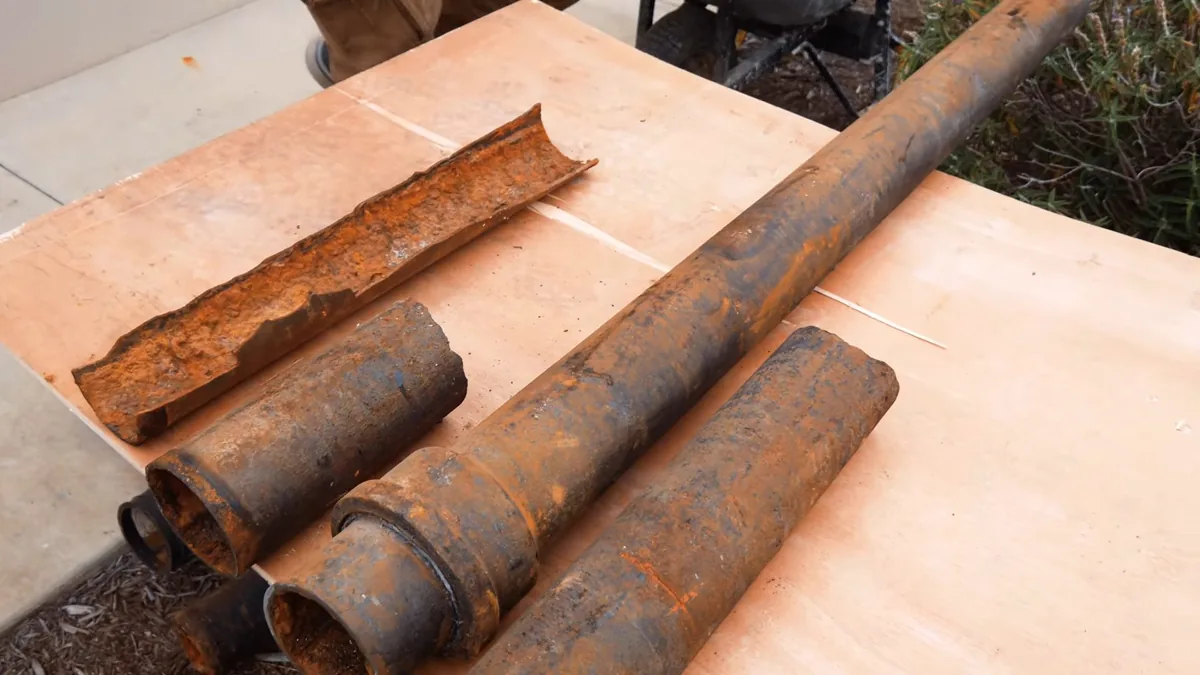
Before any conversation about cost, the useful thing is identifying the material. It takes a few minutes and you can do it yourself.
Where to look, and what you are looking at
- At the water heater, where supply lines are nearly always exposed
- Under kitchen and bathroom sinks
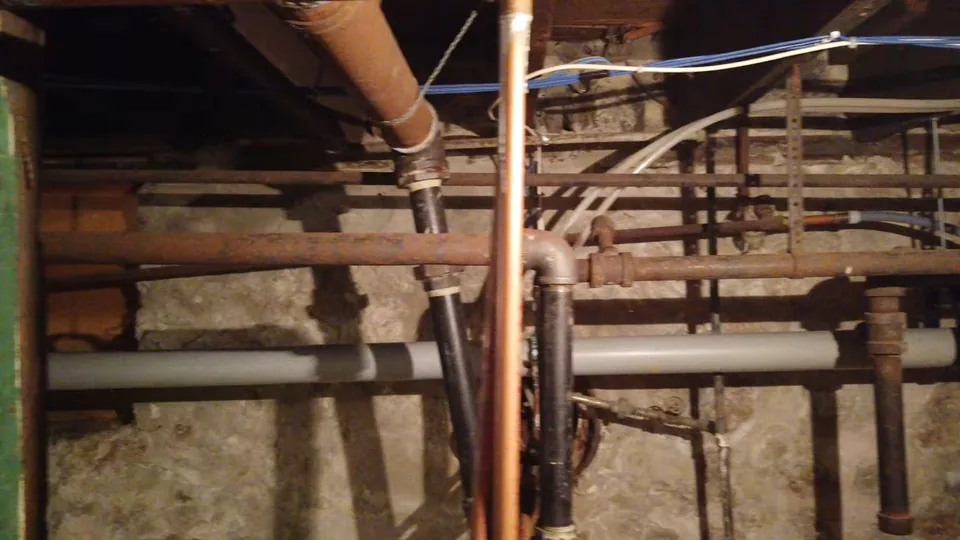
- In the basement or crawlspace, running along joists
- Where the main line enters the house
Gray plastic roughly half an inch to an inch, usually stamped PB with numbers, is polybutylene. It also turns up in white, cream and blue. Copper is obvious. Galvanized steel looks dull gray and threaded. Flexible brightly colored pipe is PEX, which is the modern material and not a problem.
If you find PB, that does not mean anything is wrong today. It means the system has a known failure pattern and is worth planning around rather than being surprised by.
Why polybutylene fails from the inside
Polybutylene was installed in homes built from 1978 to the middle of 1995, across more than ten million homes nationally. It cost less and went in faster than install than copper and it performed well initially.
The problem is chemical rather than mechanical. Chlorine in treated water attacks the plastic from the inside, and the pipe wall gradually becomes brittle and develops micro-fractures that are not visible from outside.
The relevant local detail is what the water itself carries. Fairfax Water supplies Loudoun Water's central system, and the disinfectant alternates. Chloramine covers most of the year, and each spring there is a flushing window on straight chlorine, which is the harder of the two on aging plastic.
When PB fails it usually fails at a fitting, and it fails without warning rather than starting as a weep. That is what makes it different from copper, which generally tells you first.
What era your part of Ashburn was built in
Ashburn is an unusual market to work in, because almost the entire housing stock went up inside a twenty-five year window. The town had 3,393 residents in 1990 and 46,349 by 2020.
That means era tracks neighborhood far more closely here than in an older town, and era is what decides supply material.
| Roughly when it was built | Likely supply material | What that means |
|---|---|---|
| Late 1980s to mid 1990s | Possibly polybutylene | Worth identifying. Ashburn Village opened for development in 1987 |
| Mid 1990s to early 2000s | CPVC or early PEX | Generally sound; CPVC becomes brittle with age |
| Mid 2000s onward | PEX | The current standard, no systemic issue |
The Loudoun County median year built is 2003, so most of the area sits in the lower two rows. The oldest neighborhoods are the ones worth checking, and Broadlands and Brambleton, built later, generally are not.
PEX, and why it is what goes back in
Repiping today almost always means PEX, and it is worth knowing why rather than taking it on trust.
What PEX brings
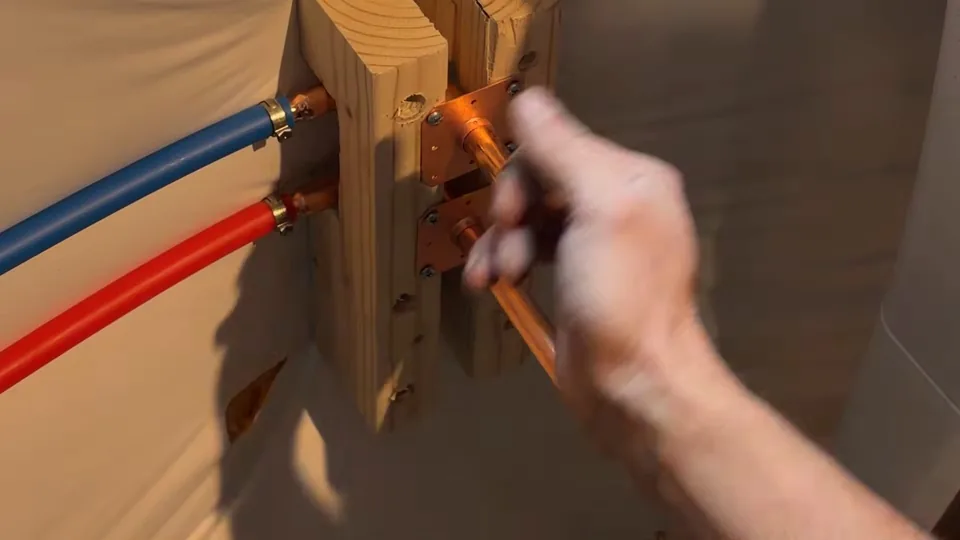
- It does not corrode, and it is not attacked by chlorine the way polybutylene is
- It tolerates freezing far better than rigid pipe, expanding rather than splitting, which matters here given how often we are called out for burst pipes after a hard freeze
- It runs in long continuous lengths, so there are far fewer fittings in the wall, and fittings are where systems fail
- It can be routed through existing cavities with less opening up than rigid pipe needs
Copper is still a valid choice and some homeowners prefer it. It costs more, takes longer, and in a chloraminated supply its own long-term behavior is not perfect either. We will quote either.
How many leaks before repiping beats repairing
There is no universal number, but there is a reasonable rule, and it is about the system rather than the leak.
One isolated failure on an otherwise sound system is a repair. Two or more within a couple of years, on the same material, usually means the material has reached the end of its service life and the next failure is already forming somewhere you cannot see.
The polybutylene case is the clearest, because the whole system is the same age and the same material. A fitting that failed in the kitchen tells you something about every other fitting in the house.
The copper case is less absolute. A single pinhole is a repair; several across different runs is a system approaching its end. Where you suspect a leak but cannot see one, tracing a leak answers that question before any decision about repiping is needed.
What a repipe week actually looks like
People imagine this being far more disruptive than it is, so it is worth setting out.
The usual sequence
- A walk-through mapping every fixture and planning routes, usually through attic space and interior walls rather than exterior ones
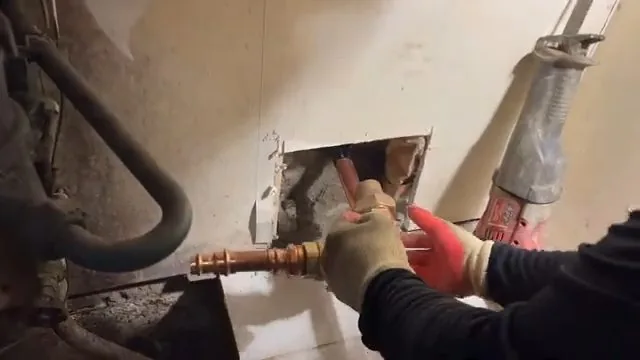
- Opening access points, which are small and in planned positions rather than wherever the pipe happens to run
- Running the new system in PEX, fixture by fixture, with the old system still live where possible
- Switching over, pressure testing and commissioning
- Patching the access points back to a paintable finish
Most homes are without water for part of one day rather than the whole job. Two to three days is typical for an average house, longer for a larger or two-story property.
Patching to a paintable finish is included. Final decoration is not, and we say that at quote stage rather than after.
Permits and inspection
A whole-house repipe is permitted work. Loudoun County Building and Development issues a plumbing permit as a residential trade permit, and the contractor pulls it in their own company name.
A contractor working here carries two licenses: one issued by the state trade board, one issued by Loudoun. The first of those shows up on the DPOR public register, which is worth a look before the work starts rather than after.
The inspection matters more on a repipe than on most jobs, because almost all of the work ends up concealed. An inspection while the runs are still open is the only independent check that happens.
What a repipe costs in Ashburn
Whole-house repiping in PEX runs roughly $4,500 to $11,000. Three things move it within that range.
Square footage is the first and most obvious. The second is the number of bathrooms, since each adds fixtures and runs. The third is whether the house is single or two story, because drywall access on a second floor adds materially to both the work and the patching.
Against that, weigh what a sequence of individual leak repairs costs, plus the drying and making good after each one. Two or three failures usually close the gap on their own.
Repiping questions from Ashburn homeowners
I found gray plastic pipe at my water heater. Is that polybutylene?
Quite possibly. Polybutylene is typically gray, roughly half an inch to an inch in diameter, and usually stamped PB with a series of numbers. It also turns up in white, cream and blue, which is why people miss it.
Check in the obvious places: at the water heater where supply lines are usually exposed, under kitchen and bathroom sinks, along joists in the basement or crawlspace, and where the main line enters the house. Flexible brightly colored pipe is PEX, which is the modern material and not a concern.
Finding it does not mean anything is wrong today. It means the system has a known failure pattern and is worth planning around rather than being surprised by. Ashburn Village opened for development in 1987, so the oldest neighborhoods here sit inside the window when it was installed.
Why does polybutylene fail from the inside?
Chlorine in treated water attacks the plastic from within. The pipe wall gradually becomes brittle and develops micro-fractures that cannot be seen from outside, so there is no warning stage the way there is with copper.
The local wrinkle is the disinfectant schedule. Loudoun Water's central supply carries chloramines for most of the year, then switches to straight chlorine for a spring flushing period, and that is the harsher of the two on this plastic.
When it goes, it usually goes at a fitting, and it fails open rather than starting as a weep. That is the practical difference from copper, which generally gives you some notice.
How many leaks should I accept before repiping instead of repairing again?
There is no universal number, but there is a sound rule, and it is about the system rather than the individual leak.
One isolated failure on an otherwise sound system is a repair. Two or more within a couple of years, on the same material, usually means the material has reached the end of its service life and the next failure is already forming somewhere you cannot see.
The polybutylene case is the clearest, because the whole system is the same age and material, so a fitting that failed in the kitchen tells you something about every other fitting in the house. Copper is less absolute: one pinhole is a repair, several across different runs is a system nearing its end.
What puts a repipe at the top of the range?
Whole-house repiping in PEX runs roughly $4,500 to $11,000, and three things move it within that.
Square footage is the most obvious. Number of bathrooms is the second, since each adds fixtures and runs. The third is single against two-story, because drywall access on an upper floor adds materially to both the work and the patching afterwards.
Weigh that against a sequence of individual leak repairs plus the drying and making good after each one. Two or three failures usually close the gap on their own.
Does a whole-home repipe need a permit and an inspection?
Yes. Loudoun County Building and Development issues a plumbing permit as a residential trade permit, and the contractor pulls it in their own company name.
The inspection matters more here than on most jobs, because almost all of the work ends up concealed behind finished surfaces. An inspection while the runs are still open is the only independent check that will ever happen on it.
Anyone working here carries two licenses, one from the state trade board and one from Loudoun itself. The state side shows up on the DPOR public register before you commit to anything.
Had more than one leak on the same system?
Tell us roughly when the house was built and what the supply pipe looks like at the water heater. Those two answers narrow it quickly.