
Hydro Jetting Services · Ashburn, VA
Hydro Jetting Services in Ashburn, VA
A cable cuts a channel through a blockage. Jetting scours the pipe wall back toward its original bore. That difference is why one line is clear for a month and another is clear for a year.
It is not right for every pipe, and the part worth getting right is deciding which one you have before anyone switches a machine on.
Cabling clears a path but leaves grease and scale on the wall
Cabling works by force. A head is driven through the blockage and opens a path, which restores flow immediately and is exactly right for a solid obstruction.
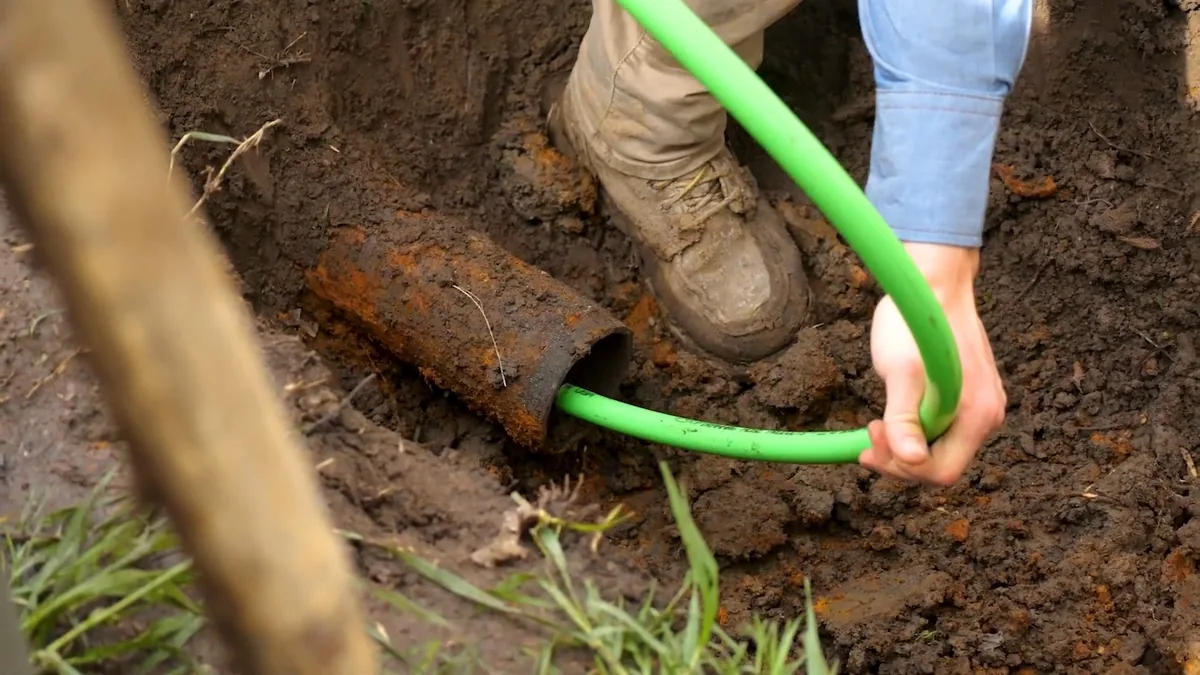
What it does not do is remove what is coating the pipe. Grease, soap scum and scale build up evenly along the wall, and a cable passing through the middle leaves nearly all of it in place.
So the line runs well for a while and then closes again, at roughly the rate it closed the first time. That pattern is the signal that the problem is the wall rather than the blockage.
What jetting does to a pipe
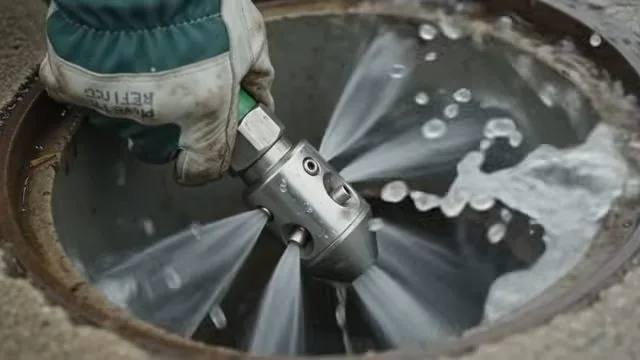
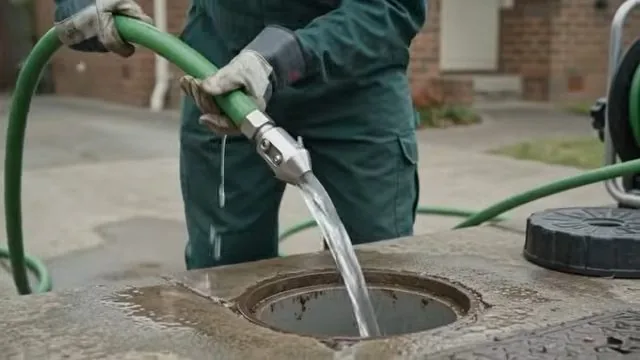
A jetter pushes water through a nozzle at high pressure. Rear-facing jets pull the hose up the line and scour the wall as they pass, carrying debris back toward the cleanout.
What it removes well
- Congealed grease and fat along the pipe wall
- Soap scum and detergent residue in laundry and bath lines
- Mineral scale, which matters here given the hardness Loudoun Water publishes
- Fine root hair, and the debris that collects around a larger root mass
- Silt and sand that have settled in a low section
What it does not do is fix the pipe. If the line has a belly, a fracture or an offset joint, jetting cleans a damaged pipe and the damage is still there afterwards.
That is why a camera run belongs either side of the work: before, to confirm the pipe can take it, and after, to show what the wall actually looks like now.
When jetting is the wrong choice
This matters more than the sales case, because jetting an unsuitable line can turn a slow drain into an excavation.
Lines we will not jet without checking first
Older clay or cast iron with visible cracking, where pressure can open an existing fracture.
Any line a camera shows as collapsed, offset or badly bellied, where the answer is repair rather than cleaning.
Orangeburg or other fiber conduit, which does not tolerate it at all.
A line with no accessible cleanout, where there is nowhere safe to introduce the hose.
Ashburn's housing stock is mostly late-1980s onward, so the very old clay laterals that rule this out are less common here than in older towns. Less common is not the same as absent, which is why we camera first.
If a line cannot be jetted, we say so. The alternative is usually trenchless pipe lining or a spot repair, and both are honest answers where cleaning is not.
Roots, and why they come back on a schedule
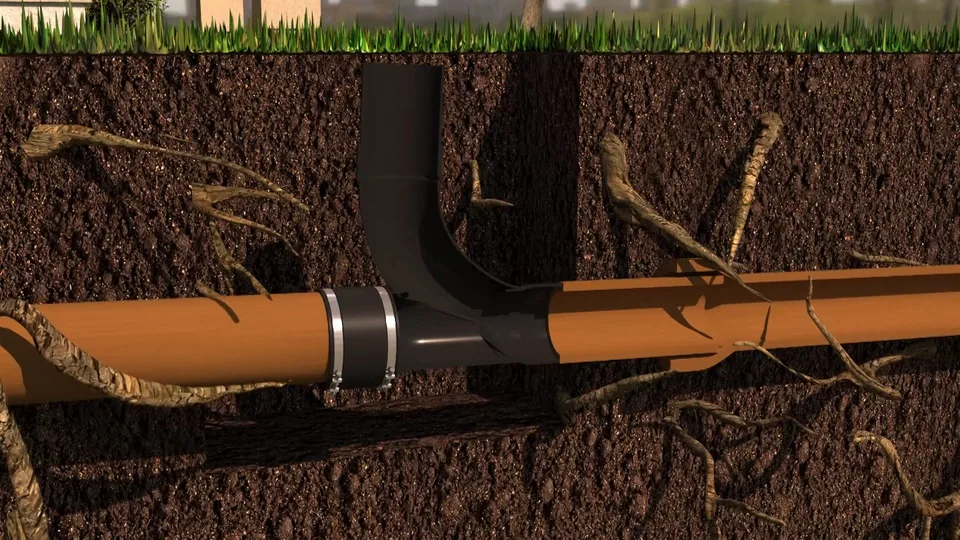
Roots enter at a joint or a crack, looking for water. Once inside they spread into a mass that catches everything passing.
Jetting with a cutting nozzle clears the mass properly rather than boring through it, which buys considerably longer than cabling does. But the entry point is still there.
So root jobs have a predictable interval, and the useful decision is whether to schedule to that interval or to fix the entry point. On a line that is otherwise sound, lining the pipe seals the joint and removes the cause.
Kitchens that run all day
Commercial kitchen lines are the clearest case for jetting, because grease arrives continuously rather than occasionally and coats the wall evenly.
With One Loudoun and the Dulles Town Center corridor in our coverage, this is regular work. The pattern is consistent: a line cabled during service is slow again within weeks, while a scoured line holds for months.
Establishing the interval and scheduling to it costs less and is far less disruptive than reacting. That side is covered under business maintenance plans.
What jetting costs in Ashburn
Jetting a main sewer line runs roughly $450 to $950. Three things move it within that range.
What decides where you land
- Footage of pipe treated, since a long lateral takes longer
- Whether the obstruction is heavy root penetration or grease buildup, which need different nozzles and different passes
- Cleanout access, because a line reached through an awkward point takes longer to set up
A camera inspection is usually quoted alongside, since jetting without seeing the line before and after leaves you no better informed than you started.
Hydro jetting questions worth asking
Will hydro jetting damage an older sewer line?
It can, which is why we camera the line first rather than jetting on request. Pressure applied to a pipe that already has a fracture, an offset joint or heavy cracking can open the existing damage.
The lines we will not jet without checking are older clay and cast iron with visible cracking, anything a camera shows as collapsed or badly bellied, and Orangeburg or other fiber conduit, which does not tolerate it at all.
Ashburn's housing stock is mostly late-1980s onward, so the very old laterals that rule this out are less common here than in older towns. Less common is not the same as absent, which is the reason for looking first.
How is jetting different from running a cable through the line?
A cable works by force. It drives a head through the blockage and opens a path, which restores flow immediately and is exactly the right tool for a solid obstruction.
It does not remove what is coating the pipe wall. Grease, soap scum and scale build up evenly along the wall, and a cable passing through the middle leaves nearly all of it there. The line runs well for a while and then closes at roughly the rate it closed before.
Jetting scours the wall back toward the pipe's original bore, carrying the debris back to the cleanout. That is why one approach buys weeks and the other buys months.
How often does a restaurant line need jetting to stay ahead of grease?
There is no universal figure, because it depends on volume, the temperature of what goes down, and how far the line runs before it reaches something larger. What is reliable is that each line settles into its own interval.
The practical approach is to find yours. Jet the line, camera it, then watch how long it takes to show buildup again. Once you know the interval, scheduling to it costs less and disrupts less than reacting during service.
For kitchens in the One Loudoun and Dulles Town Center corridor this is routine work rather than occasional, so intervals here are reasonably well established.
What makes a jetting job land at the high end of the range?
Jetting a main sewer line runs roughly $450 to $950, and three things move it within that range.
Footage of pipe treated is the first, since a long lateral simply takes longer. The second is what is in there: heavy root penetration needs different nozzles and more passes than grease buildup does. The third is cleanout access, because a line reached through an awkward point takes longer to set up.
A camera inspection is normally quoted alongside, since jetting without seeing the line before and after leaves you no better informed than when you started.
What should I ask to confirm a crew is licensed and insured for jetting work?
Ask for the Virginia State Contractors License number and the Loudoun County business license, and check the state one yourself through the Department of Professional and Occupational Regulation's public lookup. Both are required for contractors working in the county.
On insurance, the question worth asking specifically is cover for damage to the pipe itself, since jetting is one of the few drain services that can in principle worsen a line that was already failing.
A company that cameras before jetting is managing that risk rather than transferring it to you, which is a more useful signal than any certificate.
Line closing up again on a schedule?
If a drain has needed clearing more than twice, the buildup is the problem rather than the blockage. Tell us the interval and we can say whether jetting is the right answer.