
Slab Leak Detection & Repair · Ashburn, VA
Slab Leak Detection and Repair in Ashburn, VA
Most Ashburn houses have a basement or a crawlspace, so a supply line running under concrete is the exception here rather than the rule. It still happens, in places that are predictable once you know where to look.
Being straight about that matters, because the work is destructive and the wrong diagnosis is expensive in a way most plumbing is not.
Where concrete-covered pipe actually turns up in Ashburn
A slab leak means a pressurized supply line leaking where it runs under concrete. In a market built mostly on basements and crawlspaces, that describes a smaller share of houses than the search term suggests.
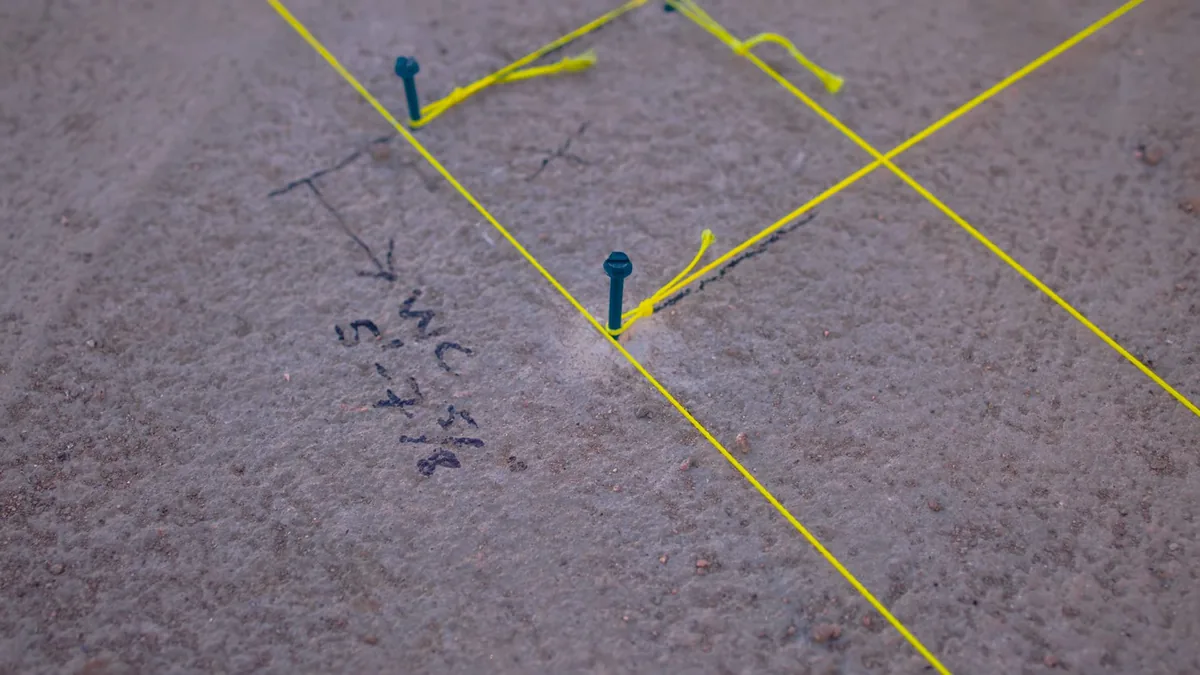
The places it does occur here
- Slab-on-grade additions built onto a house that otherwise has a basement
- Garage slabs, where a line was run to an exterior tap or a utility sink
- Some townhome and condo construction, which uses slab-on-grade more often than detached stock in this area
- Lines run beneath a basement floor slab, which is the most common version of this problem in Ashburn and the one the search term misses
That last case behaves like a classic slab leak in every way that matters: the pipe is under concrete, it cannot be seen, and getting to it means breaking the floor or going around it.
If your water loss is in a crawlspace or an unfinished basement rather than under the floor, this is the wrong page and the lighter job. Standard leak detection covers lines you can reach.
If the floor is hot or water is coming up through it
C
l
o
s
e
t
h
e
m
a
i
n
s
h
u
t
o
f
f
a
n
d
c
a
l
l
.
A
f
l
o
o
r
t
h
a
t
t
u
r
n
s
w
a
r
m
w
i
t
h
o
u
t
w
a
r
n
i
n
g
u
s
u
a
l
l
y
m
e
a
n
s
a
h
o
t
w
a
t
e
r
l
i
n
e
i
s
l
e
a
k
i
n
g
b
e
n
e
a
t
h
t
h
e
c
o
n
c
r
e
t
e
,
a
n
d
a
n
u
r
g
e
n
t
v
i
s
i
t
l
i
m
i
t
s
h
o
w
l
o
n
g
t
h
a
t
w
a
t
e
r
h
a
s
t
o
s
p
r
e
a
d
u
n
d
e
r
t
h
e
s
l
a
b
.
Warning signs of a leak under the floor, with no visible water
Under-floor leaks announce themselves indirectly, because there is no visible water until a good deal of it has already escaped.
What usually gets noticed first
- A patch of floor that is warm underfoot, which indicates a hot-water line
- The sound of running water with every fixture closed
- A water bill that climbed with no change in how the house is used
- The meter's leak indicator turning with the main shutoff to the house open and every fixture off
- Damp at the base of a wall, or flooring lifting or cupping with no spill to explain it
- Hot water that never quite runs out in one zone, because the line is heating the floor instead
The meter check is the one worth doing before you call. It costs nothing and it separates a leak from a fixture problem in about ten minutes.
The test you can run yourself
C
l
o
s
e
e
v
e
r
y
f
i
x
t
u
r
e
i
n
t
h
e
h
o
u
s
e
,
t
h
e
n
w
a
t
c
h
t
h
e
m
e
t
e
r
'
s
s
m
a
l
l
l
e
a
k
i
n
d
i
c
a
t
o
r
d
i
a
l
.
I
f
i
t
m
o
v
e
s
,
w
a
t
e
r
i
s
l
e
a
v
i
n
g
t
h
e
s
y
s
t
e
m
s
o
m
e
w
h
e
r
e
.
T
h
e
n
c
l
o
s
e
t
h
e
m
a
i
n
s
h
u
t
o
f
f
i
n
t
o
t
h
e
h
o
u
s
e
a
n
d
w
a
t
c
h
a
g
a
i
n
:
s
t
i
l
l
m
o
v
i
n
g
m
e
a
n
s
t
h
e
l
o
s
s
i
s
b
e
t
w
e
e
n
t
h
e
m
e
t
e
r
a
n
d
t
h
e
b
u
i
l
d
i
n
g
,
a
n
d
s
t
o
p
p
e
d
m
e
a
n
s
i
t
i
s
i
n
s
i
d
e
.
T
h
a
t
s
i
n
g
l
e
s
t
e
p
t
e
l
l
s
u
s
w
h
e
r
e
t
o
s
t
a
r
t
.
Locating a slab leak: acoustic listening, thermal imaging
Detection is its own piece of work and it is priced separately, because the size of the repair depends entirely on how precisely the leak was located first.
| Method | What it reads | Where it works best |
|---|---|---|
| Acoustic listening | The sound a pressurized leak makes through concrete | The primary method; works through slab and screed |
| Thermal imaging | Surface temperature differences in the floor | Hot-water lines, which show as a warm track |
| Pressure isolation | Which circuit loses pressure when it is shut in turn | Separating hot from cold and narrowing to one run |
| Tracer gas | Gas introduced into the line and detected where it surfaces | Cold lines and awkward cases where acoustics are inconclusive |
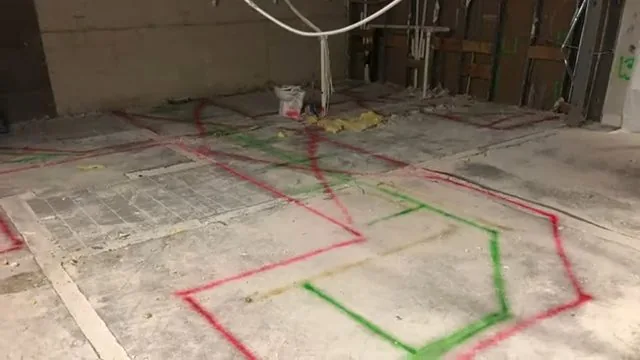
The output is a marked point on the floor, not a general area. The difference between a located leak and an approximate one is the difference between one small opening and a series of exploratory ones.
What water under concrete does, and what it does not do
This is worth separating carefully, because it is the part of the subject most often oversold.
What it does do: saturate the ground under and around the slab, carry fines away from beneath it over a long period, raise humidity in the space above, wet the base of adjoining walls, and damage flooring and trim. A hot-water leak also runs a heating bill for the ground.
What we will not tell you is that an Ashburn slab leak is moving your foundation through soil swelling. The published soil description for this area gives no shrink-swell rating that would support that claim, and we are not going to invent one to make the job sound more urgent than it is.
Where urgency genuinely comes from
N
o
t
f
r
o
m
t
h
e
f
o
u
n
d
a
t
i
o
n
.
I
t
c
o
m
e
s
f
r
o
m
t
h
e
f
a
c
t
t
h
a
t
t
h
e
w
a
t
e
r
i
s
e
s
c
a
p
i
n
g
c
o
n
t
i
n
u
o
u
s
l
y
u
n
d
e
r
p
r
e
s
s
u
r
e
,
w
i
t
h
n
o
t
h
i
n
g
t
o
l
i
m
i
t
i
t
,
a
n
d
y
o
u
p
a
y
f
o
r
e
v
e
r
y
g
a
l
l
o
n
.
A
l
e
a
k
y
o
u
c
a
n
h
e
a
r
h
a
s
b
e
e
n
r
u
n
n
i
n
g
f
o
r
a
w
h
i
l
e
.
T
h
a
t
i
s
r
e
a
s
o
n
e
n
o
u
g
h
t
o
d
e
a
l
w
i
t
h
i
t
w
i
t
h
o
u
t
n
e
e
d
i
n
g
a
s
t
r
u
c
t
u
r
a
l
s
t
o
r
y
a
t
t
a
c
h
e
d
.
Construction types that put a line under concrete
Whether you carry any risk here at all is mostly a question of how and when the house was built, and Ashburn's answer is unusually clear. The earliest stock dates from 1987, so the midcentury slab construction that drives this problem in older markets simply is not present.
What to check about your own property
- Whether any part of the house is an addition sitting on its own slab
- Whether supply lines were run under the basement floor rather than overhead through the joists
- Whether the property is a townhome or condo, where slab-on-grade is more common locally
- Whether the house falls in the 1978 to mid-1995 window, where the supply pipe itself may be polybutylene and the material is the real issue
That last point changes the whole conversation. Where a line under concrete is polybutylene, repairing the one spot that failed treats a symptom of a material problem, and a full repipe is the question actually on the table.
A note on post-tension slabs and caliche
Both come up in national material about slab leaks and neither applies here. Post-tension slabs, where cables under tension run through the concrete and cutting one is a serious matter, are a southwestern and Texan residential pattern rather than a Northern Virginia one. Caliche is a southwestern soil and does not occur in the Culpeper Basin.
We mention them to say they have been checked rather than to pad the page. If your slab is post-tensioned, which would be unusual for this area, it changes the repair approach completely and we would establish that before any cutting.
Breaking the slab against rerouting overhead
Once a leak is located there are two real options, and the right one is not always the obvious one.
| Open the slab | Reroute the line | |
|---|---|---|
| What happens | Cut and remove concrete at the located point, repair, re-pour | Abandon the under-floor run and route a new line overhead or through walls |
| Best when | A single failure in sound pipe at an accessible point | Repeated failures, a long run under finished floor, or failing pipe material |
| Leaves behind | A patched floor; finished flooring needs making good | Visible or boxed pipework; the old line stays abandoned in place |
| On polybutylene | Treats one point of a material that fails at many | Usually the better answer, and often part of a wider repipe |
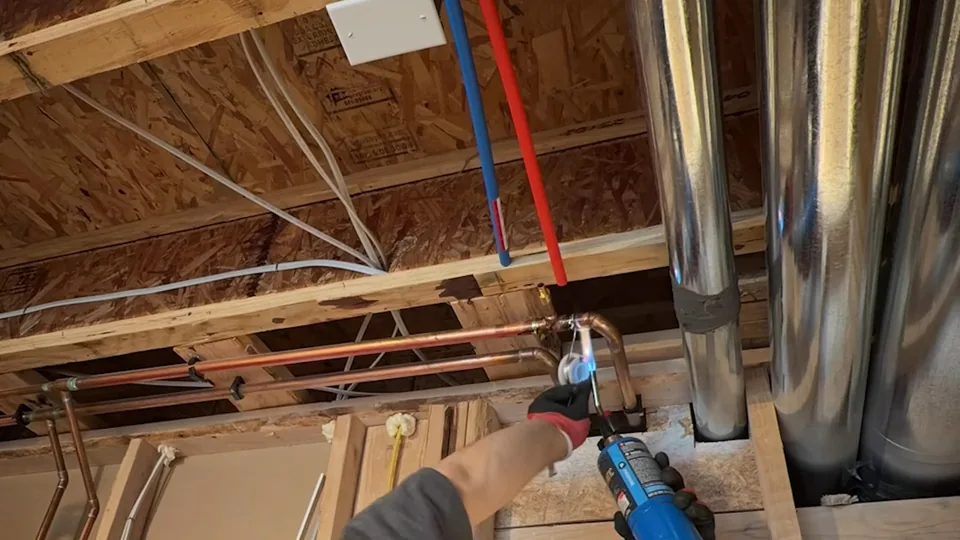
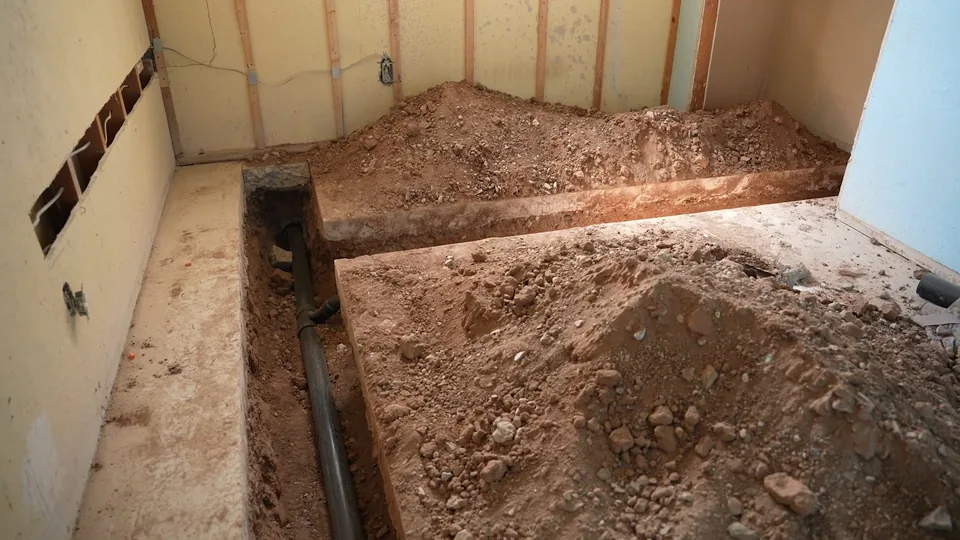
Rerouting is the method the coverage sheet files under trenchless slab work, and it overlaps deliberately with trenchless sewer repair, which covers the no-dig approach on the drainage side. Same instinct, different pipe.
Why slab leak detection and spot repair costs spread so far
Slab leak detection and spot repair in Ashburn runs roughly $1,500 to $4,500, and the spread is real rather than hedging.
The three things that decide it
- How long detection takes, which depends on how the plumbing was run and how clearly the leak reads through the floor
- The depth of the line below the slab, which sets how much concrete comes up and goes back
- Whether the fix is a concrete breakout and repair or an overhead reroute in PEX, which are different jobs at different prices
Detection is quoted separately from repair for the same reason it is done first: until the line is found, nobody can tell you honestly which of those two repairs you are buying.
Finished flooring over the repair is its own cost and not one we fold into a plumbing figure. The full table of ranges is on the cost ranges page.
Slab and under-floor leak questions
Do Ashburn homes even have slab leaks?
Fewer than the search term implies, and it is fairer to say so. Housing here is predominantly basement and crawlspace, which puts most supply pipe somewhere reachable rather than under concrete.
Where it does occur: slab-on-grade additions onto an otherwise basemented house, garage slabs carrying a line to an exterior tap, some townhome and condo construction, and lines run beneath a basement floor slab.
That last one is the common local version and the search term misses it entirely. The pipe is under concrete, it cannot be seen, and reaching it means breaking the floor or going around it, which is a slab leak in everything but name.
What are the signs of a supply line leaking under a slab or basement floor?
A warm patch underfoot is the clearest one, and it means a hot-water line. Running water audible with everything closed is the next. After that it is usually the bill, or flooring lifting with no spill to account for it.
The check worth doing yourself is the meter. Close every fixture and watch the small leak indicator dial; if it turns, water is leaving the system. Then close the main shutoff into the house and watch again.
Still turning means the loss is between the meter and the building. Stopped means it is inside. Ten minutes of your time narrows our starting point considerably.
Can a leak under concrete actually damage the foundation?
It saturates the ground under and around the slab, moves fine material out from beneath it over a long period, wets the base of adjoining walls and raises humidity in the room above. Flooring and trim take the visible damage.
What we will not tell you is that it is swelling your soil and moving your foundation. The published soil description for this area carries no shrink-swell rating that would support that, and inventing one to add urgency would be dishonest.
The real urgency is simpler. The water is escaping under pressure with nothing limiting it, you are paying for all of it, and a leak loud enough to hear has been running a while already.
When does rerouting a line overhead beat breaking the slab?
When the failure is likely to repeat. One failure at an accessible point in sound pipe is worth opening the floor for. A long run under finished flooring, or pipe that has already failed more than once, is not.
Material decides it more than anything else. Where the line under the concrete is polybutylene, repairing the one spot that failed treats a symptom, because that material fails at fittings along its whole length.
A reroute abandons the under-floor run and takes a new line overhead or through walls. You end up with visible or boxed pipework instead of a patched floor, which most people accept once the alternative is explained.
Why is the range on slab leak work so wide?
Because detection and repair are two different jobs and either one can be the larger half. The work runs roughly $1,500 to $4,500 here.
Three things set it. How long the leak takes to locate, which depends on how the plumbing was run. How deep the line sits below the slab, which decides how much concrete comes up and goes back. And whether the fix is a concrete breakout or an overhead reroute in PEX.
Detection is quoted on its own, before any repair is agreed. Making the finished floor good afterwards is a separate trade and we do not fold it into a plumbing figure.
Who is responsible if concrete work goes wrong during a slab repair?
The contractor who does it, and this is the one service where that question deserves asking properly, because the work is destructive and irreversible in a way most plumbing is not.
Ask for the Virginia state trade license and the Loudoun County business license before anyone cuts anything, and check the state one on the DPOR public register. Ask specifically who makes the floor good afterwards and whether that is in the quote.
Ask also what happens if the leak is not at the marked point. A crew that located it properly will answer that without hesitating; one that was guessing will not.
Warm spot on the floor, or a meter that will not stop?
Call before anything gets opened up. Locating the line is a separate piece of work from repairing it, and it is the piece that decides how much concrete has to come up at all.