
Water Damage Restoration & Cleanup · Ashburn, VA
Water Damage Restoration and Cleanup in Ashburn, VA
What happens in the first few hours decides how much of the house has to come out. Water moves along joists and into cavities quickly, and material that is dried fast often survives, while material left wet does not.
Our scope here is extraction and drying. Rebuilding what came out is a different trade, and we say which is which before starting.
Moisture survey first, then remove wet material before drying
Water does not sit where it lands. It runs along framing, soaks into the edges of material, and moves into cavities where nothing can dry on its own, which is why the first assessment is a moisture survey rather than a look around.
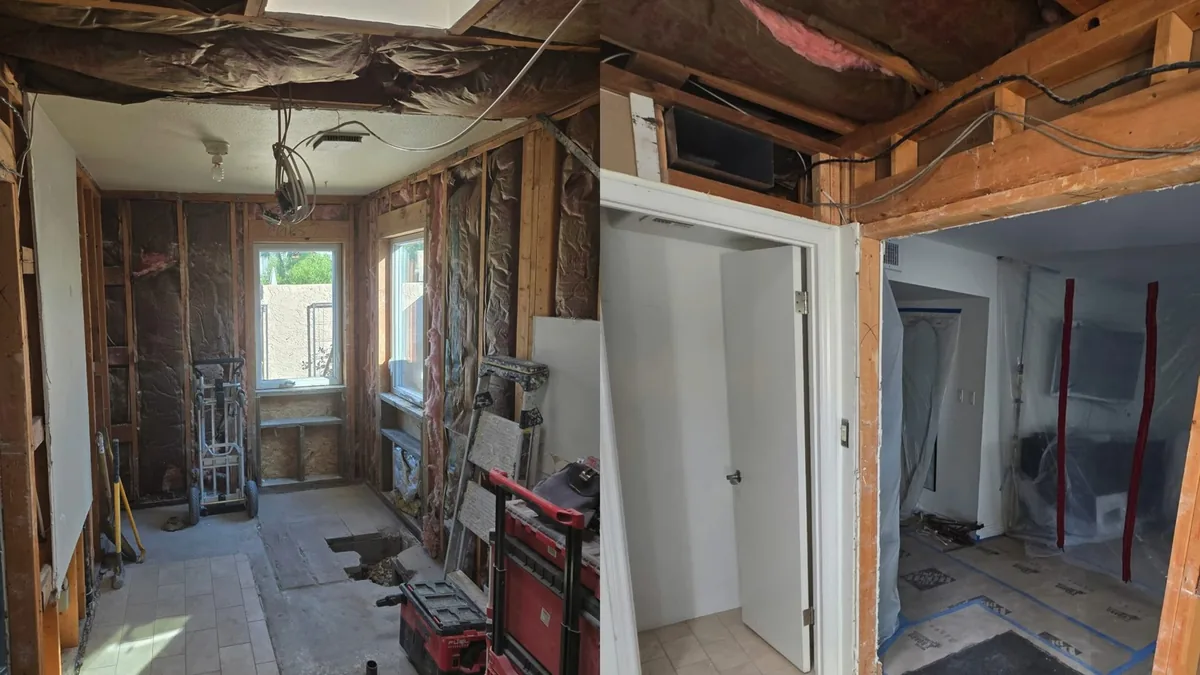
What to do before anyone arrives
- Stop the source if you safely can, usually at the main shutoff
- Switch off power to affected circuits at the panel before going near standing water
- Lift what you can off the floor, particularly anything fabric or paper
- Open interior doors so air can move between rooms
- Photograph everything before it is moved, for your insurer
What not to do: run a household vacuum on standing water, and do not assume a surface that feels dry underfoot is dry inside.
Beyond roughly the second day, the question stops being how much water there is and becomes what has been wet for how long.
Water damage scope: extraction and drying versus rebuilding
Being clear about scope avoids an awkward conversation later, so it is worth stating plainly.
| In scope | Not in scope |
|---|---|
| Extracting standing water | Rebuilding or replacing what was removed |
| Removing saturated material that cannot be dried | Carpentry, drywall hanging and finishing |
| Dehumidification and structural drying | Painting and decorating |
| Monitoring moisture until readings return to normal | Flooring supply and fitting |
| Removing mold growth that has already formed | Mold testing or air-quality certification |
We handle the removal and drying side. Reconstruction is a separate trade and we will tell you that at the start rather than after the invoice.
On mold specifically, we remove growth that is there. We do not carry out testing or issue air-quality clearances, and anyone who needs those should engage a specialist who does that work independently.
Ceilings and walls that got wet
Drywall behaves predictably. It wicks water upward from the bottom edge and downward from a saturated ceiling, and once the paper facing has released from the core, that section is finished.
The judgement is how far the wet area extends past what you can see. Moisture meters and thermal imaging map that properly, which usually means removing less rather than more.
A sagging or bulging ceiling is a different matter and is treated as urgent. Water pooling above drywall is heavy, and the failure, when it comes, is sudden.
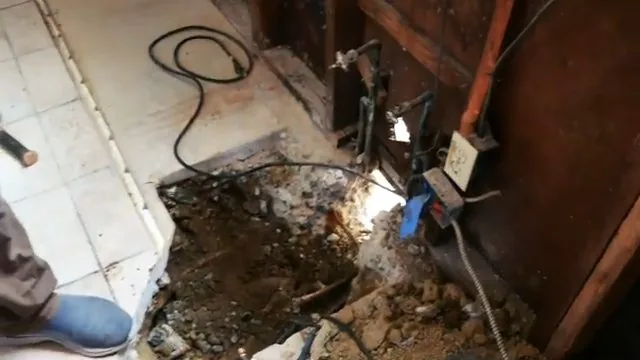
Hardwood floors after water: quick drying often saves them
Hardwood is the material where speed matters most and where opinions differ most, so the honest position is worth stating.
Wood that is dried quickly often recovers, including after visible cupping. Wood that has been wet for days, or that sits over a wet subfloor, usually does not, because the problem is underneath rather than on the surface.
What decides whether a floor is saved
- How many hours passed before extraction started
- Whether the subfloor underneath is also wet, which drying from above cannot reach
- Whether the boards are solid or engineered, since engineered board delaminates rather than cupping
- Whether the room can be dried with controlled airflow and dehumidification rather than just heat
Heat alone is not drying. Driving moisture into the air without removing it from the room moves the problem to the next cold surface.
Carpet pad and subfloor: what to save and what to replace
Carpet is often salvageable. Carpet pad almost never is, and leaving it is the usual reason a room smells weeks after it looked dry.
The subfloor under both is the part that actually matters. If it is chipboard it may have swollen at the joints, and that is a structural question rather than a cosmetic one.
Where the water was clean and extraction started quickly, lifting the carpet, discarding the carpet pad and drying the subfloor underneath is the usual approach.
Storm water, flooding and ice dams
Not all water damage comes from plumbing, and the source changes both the handling and the insurance position.
Ashburn gets roughly 34.7 inches of rain a year with May the wettest month, and a cold season running from late November into early March that brings about 18.2 inches of snow. Both ends of that produce their own version of this call.
Three sources that are not a burst pipe
- Surface water entering at a basement wall or window well after heavy rain
- Ice damming at a roof edge, where meltwater backs up under the covering and enters at the eaves
- Groundwater rising through a basement floor during a prolonged wet spell
Where the cause is drainage rather than plumbing, the lasting fix is drainage and waterproofing work rather than repeated cleanups.
Sewage backups are handled differently
Clean water from a supply line and contaminated water from a sewage backup are not the same job, and treating them the same is how people get ill.
Contaminated water means porous material that absorbed it comes out rather than being dried. Carpet, carpet pad, drywall below the line and insulation are all removal rather than drying decisions.
Hard surfaces are cleaned and sanitized rather than discarded. The space is then dried the same way, but the removal threshold is much lower.
The cause also needs fixing, or it recurs. That is usually sewer or drain line repair work rather than anything in this scope.
When mold follows water
Mold needs moisture and time. Material dried within a couple of days generally does not grow it; material left wet reliably does.
Where growth has already formed, remediation means taking out the affected porous material and cleaning what remains, then drying the space so it does not return. Cleaning a surface without fixing the moisture source achieves nothing.
We do not carry out mold testing or issue clearances. If you need documented air quality, for a sale or an insurance position, that should come from an independent party rather than from the company doing the removal.
Drying a business: keeping floor area in use during drying
For a business the driver is how much of the floor area can stay in use while drying runs, which is a different optimization from a house.
That usually means containing the affected area, running equipment overnight where possible, and sequencing so trading space comes back first.
Scale matters too. A commercial loss frequently needs more drying equipment than a residential one and a longer monitoring period before readings settle.
Documenting the water damage for your insurer
The documentation is worth as much as the drying, and it is the part most often done badly because everyone is busy dealing with the water.
What to capture
- Photographs and video before anything is moved or removed
- The source of the water and the time you discovered it
- What you did to stop it and when
- Moisture readings taken on arrival, which we record and provide
- An itemized list of what was removed and why
- Daily readings through the drying period, showing the space reached normal levels
We supply the moisture records and the removal list as a matter of course. What we do not do is advise on your policy or negotiate on your behalf, because that is not our role and pretending otherwise would not help you.
Water damage questions people ask first
Water came through the ceiling. What happens in the first few hours?
Stop the source if you safely can, switch off power to affected circuits at the panel before going near standing water, and photograph everything before anything moves. Then call, because extraction starting sooner is the single biggest factor in how much survives.
On arrival the sequence is extraction of standing water, then mapping how far the wet area actually extends with moisture meters and thermal imaging, then setting up drying equipment. The mapping matters because it usually means removing less rather than more.
A sagging or bulging ceiling is treated as urgent regardless of anything else. Water pooling above drywall is heavy and the failure, when it comes, is sudden.
Is a sewage backup handled differently from clean water?
Yes, and the difference is significant. With contaminated water, porous material that absorbed it comes out rather than being dried: carpet, carpet pad, drywall below the water line, and insulation are removal decisions rather than drying ones.
Hard surfaces are cleaned and sanitized rather than discarded, and the space is then dried the same way as any other loss. The threshold for removing material is simply much lower.
The cause also needs resolving or it recurs, and that is usually sewer line work rather than anything in this scope.
Can wet hardwood and drywall be dried in place or do they come out?
It depends almost entirely on how many hours passed before extraction started, and on whether what is underneath is also wet.
Hardwood dried quickly often recovers, including after visible cupping. Hardwood that has been wet for days, or that sits over a wet subfloor, usually does not, because drying from above cannot reach the problem. Engineered board delaminates rather than cupping, and delamination is not reversible.
Drywall wicks water from the wet edge. Once the paper facing has released from the core, that section is finished. Moisture mapping decides how far past the visible mark the removal has to go, which normally means taking out less than a guess would.
How does insurance usually interact with the cost of water cleanup?
We cannot advise on your policy and would not pretend to, but the documentation side is where people most often lose money, so it is worth knowing what to capture.
Photograph and video everything before anything is moved. Record the source of the water and the time you found it, what you did to stop it and when, and keep an itemized list of what was removed and why.
We supply the moisture readings taken on arrival and the daily readings through the drying period, which show the space actually reached normal levels. Those records and the removal list come as standard rather than on request.
What should I document before anyone starts drying the space?
Everything, and before anything moves. Photographs and video of each affected room, the standing water, the source, and any contents that got wet. Once extraction starts, that evidence is gone.
Also note the practical facts people forget under pressure: when you discovered it, what you shut off and at what time, and whether power was isolated. Those details matter later and nobody remembers them a week on.
You are also entitled to ask who is actually doing the work and to check them. Both the state trade license and the county business license are required here, and the first is searchable on the DPOR site.
Water through a ceiling or across a floor?
Stop the source if you can, keep people away from anything electrical, and call. Extraction starting sooner is the single biggest factor in how much is salvageable.