
Water Heater Installation & Replacement · Ashburn, VA
Water Heater Installation Done Right in Ashburn, VA: Sizing, Permits, Venting
Most people replace a water heater the week it fails, under time pressure, with no hot water in the house. Planning it a year early costs the same and gets a better decision.
The three questions that matter are sizing, fuel type, and what the installation has to include to pass inspection.
Planned water heater replacement beats a failure on a Sunday
A tank that is twelve years old and still working is not an emergency, but it is a decision worth making deliberately rather than at six on a Sunday evening.
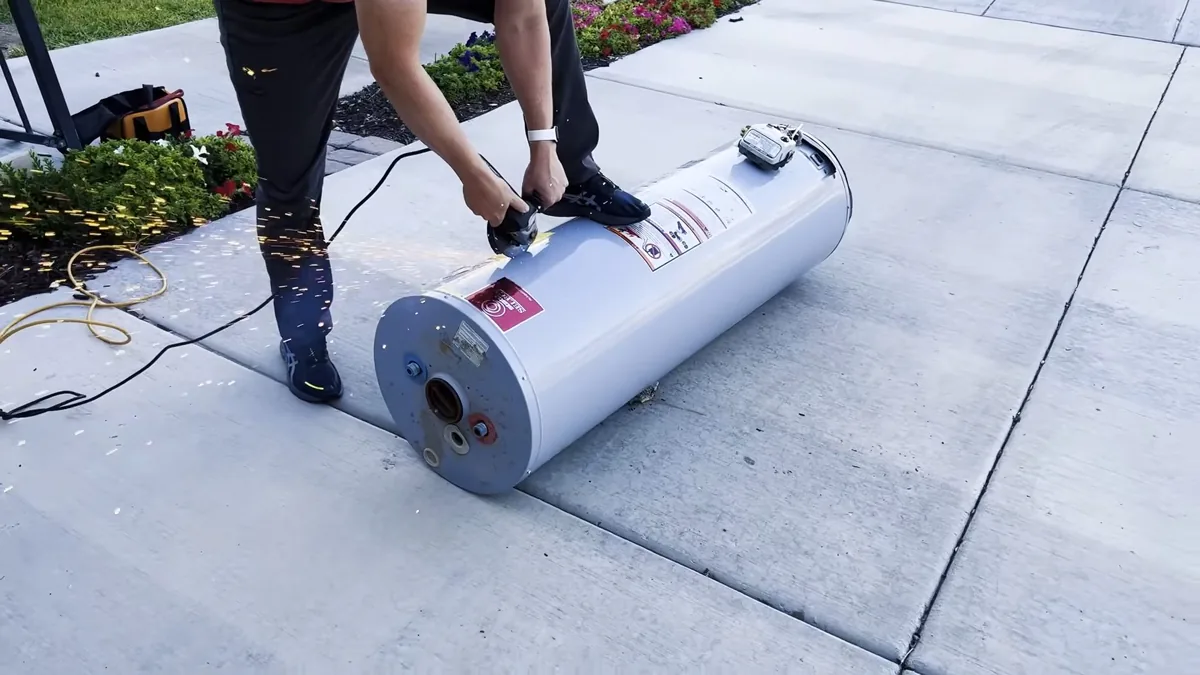
Planned replacement gets you a choice of unit, a scheduled slot at ordinary rates, and the chance to correct anything the original installation got wrong. Emergency replacement gets you whatever is on the van.
The practical trigger is age plus any first symptom: rumbling during heating, slower recovery, rust-colored water, or weeping at a fitting. None of those are failures yet, and all of them are notice.
Water heater capacity by household size and bathroom count
Capacity is the decision people most often get wrong, usually by replacing like for like when the household has changed since the original unit went in.
| Household | Typical tank | Note |
|---|---|---|
| 1 to 2 people, one bathroom | 40 gallon gas, 40 to 50 electric | Electric recovers more slowly, so size up |
| 3 to 4 people, two bathrooms | 50 gallon gas, 50 to 66 electric | The common Ashburn case |
| 5 or more, or a soaking tub | 66 to 80 gallon, or two units | A large tub can empty a 50 on its own |
| Intermittent or holiday use | Smaller, or consider tankless | Standby loss matters more than capacity |
First-hour rating is a more useful number than raw gallons, because it accounts for how fast the unit reheats while being drawn. Two 50-gallon tanks with different burners are not the same appliance.
Gas, electric or heat pump
Three options, and the right one depends as much on what is already present in the house as on the unit itself.
How they compare in an Ashburn house
- Gas: fastest recovery and lowest running cost where a gas supply and a suitable flue already exist. Replacing like for like is usually the simplest job on this list.
- Electric: no venting or combustion air to deal with, so installation is simpler, but recovery is slower and running cost is higher.
- Heat pump, also sold as a hybrid: markedly more efficient than standard electric, but it needs a reasonable volume of surrounding air, produces a cool exhaust, needs a condensate drain, and makes some noise.
The heat pump caveat is the one worth checking before committing. A basement with space around the unit usually suits one. A tight closet usually does not, because the unit cannot draw enough air to work as rated.
Switching fuel types is a bigger job than swapping a unit. Going from electric to gas means a gas line and venting. Going from gas to electric means panel capacity and a dedicated circuit.
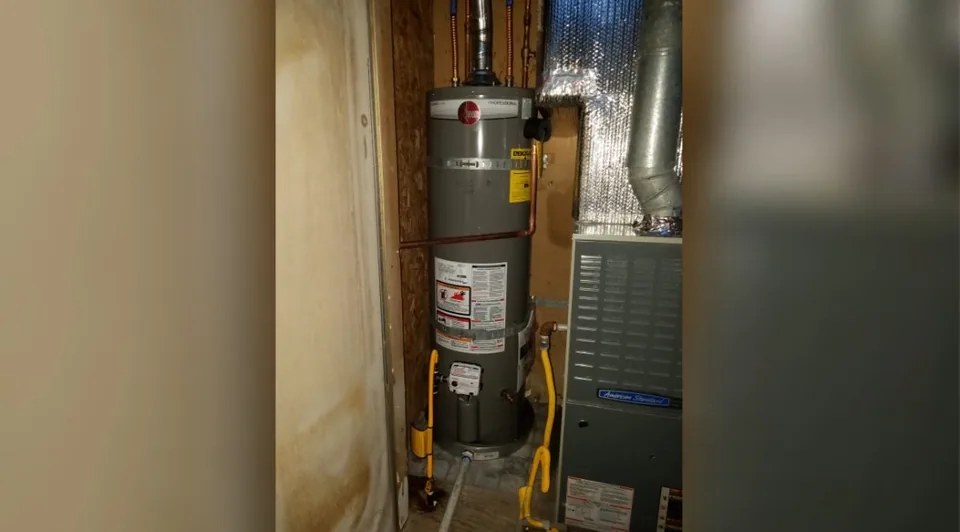
The permit, and what the inspector looks at
Water heater replacement is permitted work in Loudoun County. The contractor pulls the permit in their own company name before the job starts, and an inspection follows.
Loudoun County Building and Development handles this, at 1 Harrison Street SE in Leesburg, with applications going through the LandMARC system. The work is governed by the Virginia Uniform Statewide Building Code.
What gets checked on a gas tank replacement
- Vent material, slope, clearances and termination
- Draft hood connection, properly screwed and supported
- Temperature and pressure relief valve
- Relief discharge line, full size, terminating near the floor
- Thermal expansion tank where the system requires one
- An accessible cold-side shutoff
- Dielectric unions at the connections
- Gas shutoff and sediment trap
- Drain pan and its drain line
- Combustion air openings, high and low
Requirements change, so confirm current ones for your job with Building and Development on 703-777-0220 rather than taking any contractor's word for it, including ours.
What a correct installation includes beyond the unit
The price difference between a low-looking quote and a complete one is usually these items, which is worth knowing when comparing.
Included in a proper install
- New flexible connectors rather than reusing the old ones
- A new cold-side shutoff if the existing one is seized
- An expansion tank where the system is closed and requires it
- A correctly sized and routed relief discharge pipe
- A drain pan with a routed drain where the location needs one
- Removal and disposal of the old unit
- The permit, the inspection, and the paperwork closing it out
A quote that omits the permit is not a lower price for the same work. It is a different piece of work with no record that anyone independent checked it.
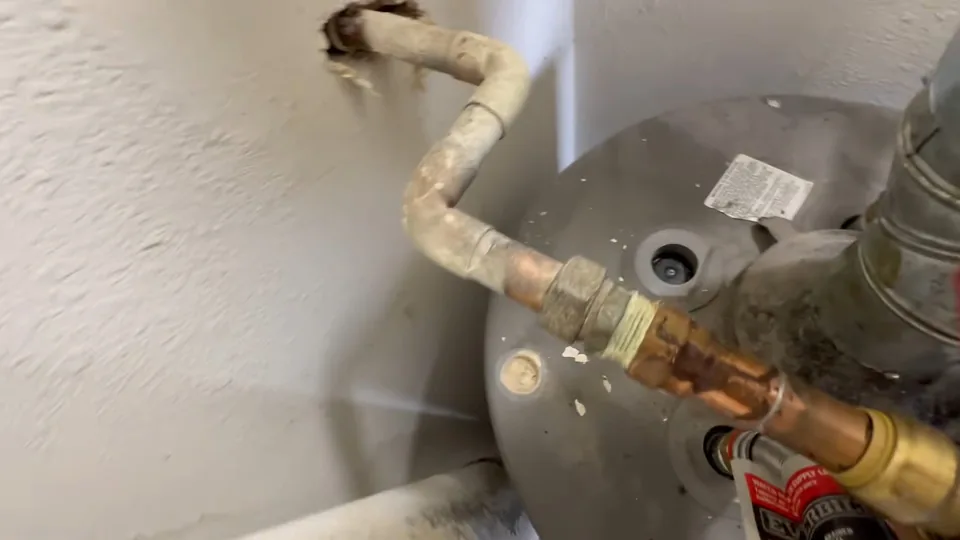
What the installed price covers
Tank replacement runs roughly $1,200 to $2,800. Three things move it inside that range.
Tank size is the first, with the step from 40 to 50 gallons being the most common. The second is gas against electric venting, since a gas unit brings flue work that an electric one does not. The third is whether the system needs an expansion tank to meet code.
A tankless conversion is a different range entirely at $2,500 to $4,800, and the reasons are set out on our tankless conversion page.
Installation questions people ask
My heater is 12 years old. Should I replace it before it fails?
A twelve-year-old tank that still works is not an emergency, but it is worth deciding deliberately rather than at six on a Sunday evening with no hot water in the house.
Planned replacement gets you a choice of unit, a scheduled slot at ordinary rates, and the chance to correct anything the original installation got wrong. Emergency replacement gets you whatever is available that day.
The practical trigger is age plus any first symptom: rumbling during heating, slower recovery, rust-colored water, or weeping at a fitting. None of those are failures yet. All of them are notice.
Gas, electric or heat pump for an Ashburn house?
Gas gives the fastest recovery and lowest running cost where a supply and a suitable flue already exist, and a like-for-like swap is the simplest job of the three. Electric avoids venting and combustion air entirely, so installation is simpler, but recovery is slower and running cost higher.
A heat pump unit, sometimes sold as a hybrid, is markedly more efficient than standard electric. The caveat is physical: it needs a reasonable volume of surrounding air to draw from, produces a cool exhaust, needs a condensate drain, and makes some noise. A basement with space around it usually suits one; a tight closet usually does not.
Switching fuel type is a bigger job than swapping a unit. Electric to gas means a gas line and venting; gas to electric means panel capacity and a dedicated circuit.
Who pulls the permit and what does the inspector look at?
The contractor pulls it, in their own company name, before work starts. Loudoun County Building and Development handles it at 1 Harrison Street SE in Leesburg, with applications going through the LandMARC system under the Virginia Uniform Statewide Building Code.
On a gas tank replacement the inspection covers vent material, slope, clearances and termination, plus the draft hood connection. It also covers the temperature and pressure relief valve and its full-size discharge line terminating near the floor, and a thermal expansion tank where the system requires one. The remaining items are an accessible cold-side shutoff, dielectric unions, the gas shutoff and sediment trap, the drain pan and its line, and combustion air openings.
Requirements do change, so confirm what applies to your job with Building and Development on 703-777-0220 rather than relying on any contractor, us included.
What is included in an installed price beyond the unit itself?
New flexible connectors rather than reused ones, and a new cold-side shutoff if the existing one is seized. An expansion tank where the system is closed and requires one, plus a correctly sized and routed relief discharge pipe. A drain pan and drain where the location needs one, removal and disposal of the old unit, and the permit and inspection.
Tank replacement runs roughly $1,200 to $2,800, and what moves it within that range is tank size, gas against electric venting, and whether an expansion tank is required.
Those included items are usually the difference between a low-looking quote and a complete one, which is worth knowing when you compare two numbers.
How do I confirm the company pulling my permit is properly licensed?
Two credentials apply here. One is the Virginia trade license, the other a business license issued by the county itself. Ask to see both.
The state side is searchable on the Virginia Department of Professional and Occupational Regulation's public register, which takes about a minute from a phone.
A practical signal beyond the paperwork: the permit is pulled in the contractor's own company name, not yours. If anyone suggests you pull it as the homeowner to save time, that moves the responsibility onto you and is worth declining.
Replacing a water heater in Ashburn?
Tell us the age and capacity of the current unit and whether it is gas or electric. That is enough for a sensible conversation about what should replace it.