
Water Heater Repair · Ashburn, VA
Water Heater Repair for No Hot Water, Leaks and Pilot Problems in Ashburn, VA
No hot water is usually one of four things, and which one it is can often be narrowed before anyone arrives. The age of the unit and whether it is gas or electric does most of that narrowing.
The one symptom that is not a repair is water coming through the body of the tank itself.
No hot water this morning
Start with whether it is all hot water or some. A complete loss points at the heat source. Hot water that runs out faster than it used to points at capacity or sediment instead.
What to check before calling
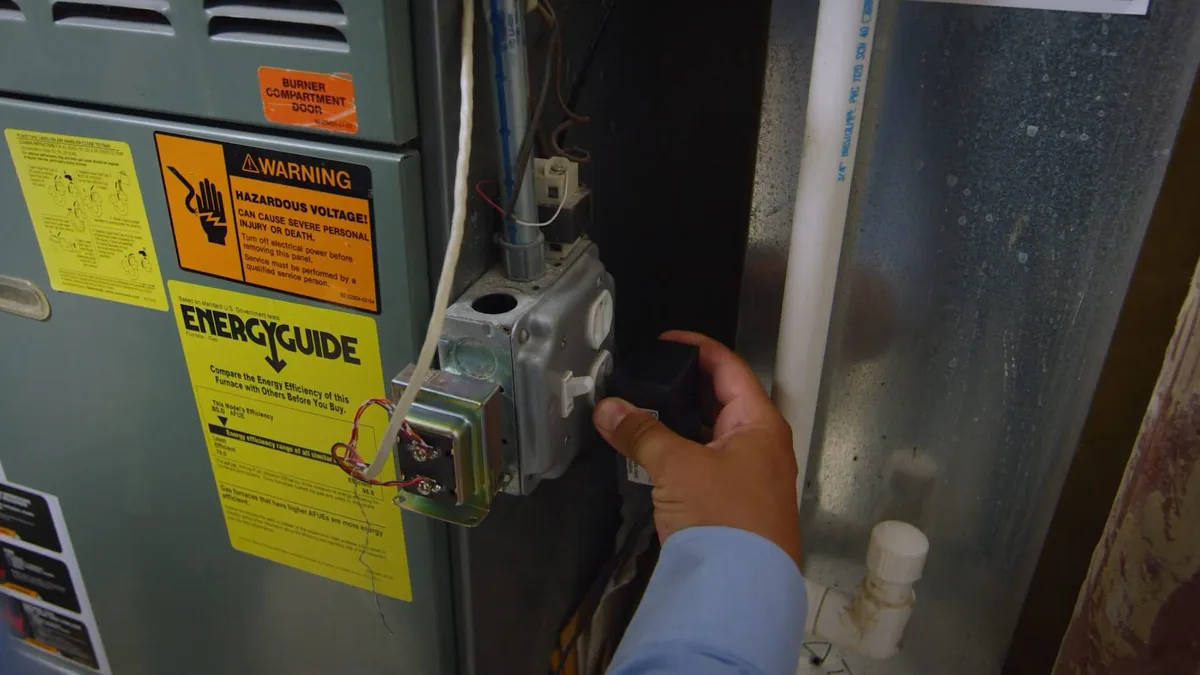
- The age of the unit, usually on a label near the top, since the serial number encodes the manufacture date
- Whether it is gas or electric, which decides the entire diagnostic path
- Whether the breaker has tripped, on an electric unit
- Whether the pilot is lit or the status light is flashing a code, on a gas unit
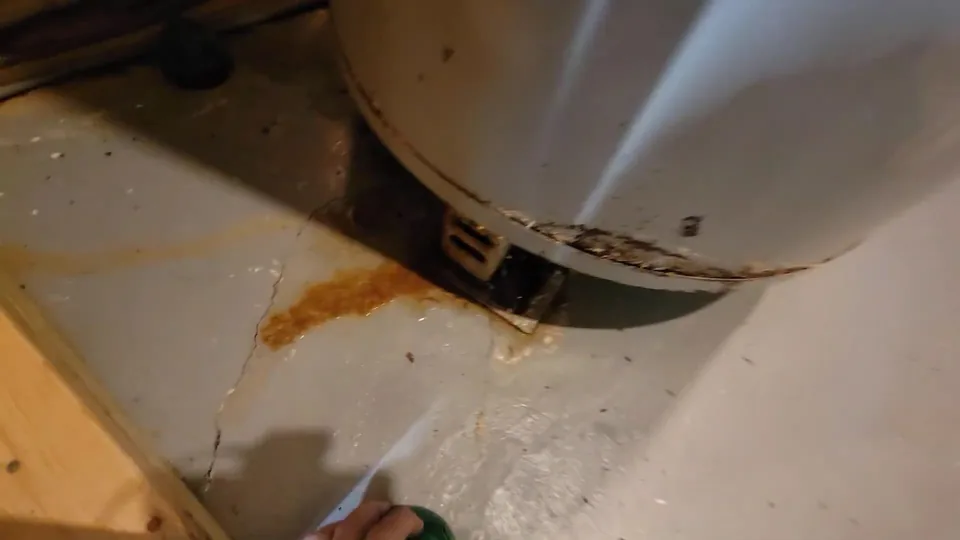
- Whether anything is wet underneath, which changes the urgency
Age matters more than people expect. A twelve-year-old tank with a failed component is a different conversation from a four-year-old one.
Gas units and what tends to fail
On a gas tank the failures are mostly about ignition and combustion, and they follow a fairly predictable order.
A thermocouple or flame sensor that no longer holds the gas valve open is the most common, and it is an inexpensive part. A failed gas control valve is less common and costs considerably more, which is where age starts deciding the answer.
Venting problems show up differently: the unit lights and then shuts down, or you notice soot or condensation around the draft hood. That is a safety issue rather than a comfort one and it gets treated as such.
If a gas unit will not stay lit and you can smell gas near it, stop diagnosing and treat it as a gas leak instead.
Electric units and what tends to fail
Electric tanks have fewer moving parts and a narrower failure set. Two heating elements and two thermostats account for most calls.
| Symptom | Usual cause | Note |
|---|---|---|
| No hot water at all | Upper element or upper thermostat, or a tripped breaker | Check the high-limit reset button first |
| Hot water runs out quickly | Lower element failed | The upper element alone heats only the top of the tank |
| Water too hot | Thermostat out of calibration | Worth correcting promptly, scalding risk |
| Breaker trips repeatedly | Element shorted to the tank | Do not keep resetting it |
Elements and thermostats are inexpensive and usually worth replacing on any unit that is otherwise sound. A tank that trips a breaker repeatedly is telling you the element has failed into the water, which is a different matter.
Water underneath: which of four things it is
A wet floor under a water heater has a small number of causes and they separate cleanly into repairs and replacements.
| Where it comes from | What it is | Outcome |
|---|---|---|
| A fitting at the top | Inlet or outlet connection, or a dielectric union | Repair |
| A small pipe running down the side | Temperature and pressure relief valve discharging | Repair, but find out why it is discharging |
| The drain valve at the bottom | Valve seat or a loose cap | Repair |
| The tank body itself | The steel shell has corroded through | Replace, there is no repair for this |
The relief valve case is worth pausing on, because a discharging relief valve is a symptom rather than a fault. It usually means thermal expansion has nowhere to go, which on a closed system points at a missing or failed expansion tank.
When the heater is not the only thing needing attention
A fair number of these visits turn into a combined repair, because the valves, connectors and fixture supplies around the heater are the same age as the heater itself.
What we check while we are there
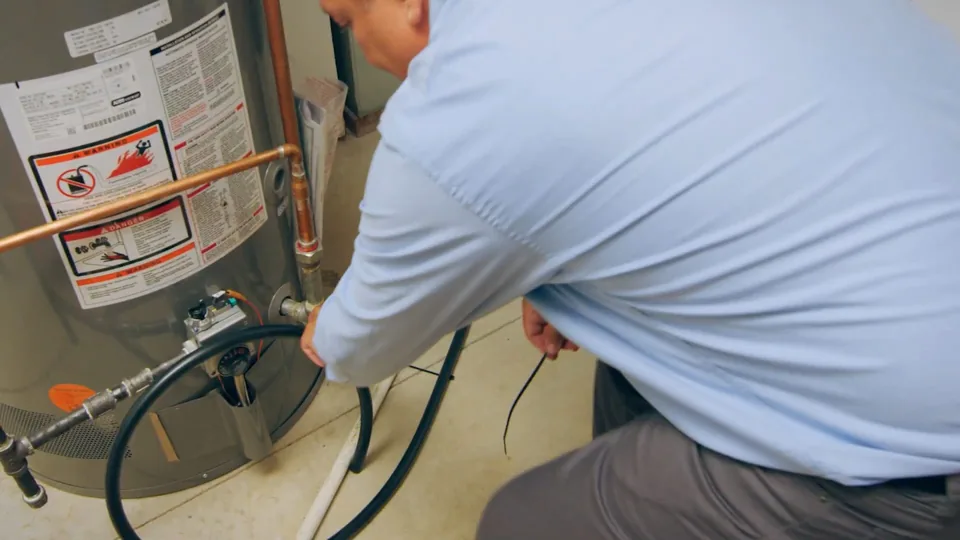
- The cold-side shutoff, which is often seized on an older install
- Flexible connectors, which have a service life of their own
- The expansion tank, if there is one, since a waterlogged one does nothing
- The relief valve discharge pipe, which should run full size to near the floor
- The drain pan and its drain line, where one is fitted
Replacing a seized shutoff during a planned visit costs very little. Discovering it is seized during an emergency costs a good deal more.
What Loudoun Water's hardness does to a tank
The utility's published figure for this area is 4.9 to 9.9 grains per gallon, a band Loudoun Water describes as moderately hard to hard. Meaningful, without being extreme.
What it means in practice is sediment. Minerals drop out of suspension as water is heated and settle at the bottom of the tank, where they insulate the burner from the water above.
The symptoms are a rumbling or popping sound during heating, longer recovery times, and a unit that uses more energy to do the same job. Flushing the tank annually slows that down.
It is not the extreme hardness some parts of the country deal with, so the honest framing is that a flush is worthwhile maintenance here rather than an urgent necessity.
Where repair stops making sense
The useful rule is the age of the tank against the cost of the fix.
Repair is usually right when
- The unit is under about eight years old and the failure is a component
- The part is a thermocouple, element, thermostat or valve
- The tank itself shows no corrosion at the seams or base
Replacement is usually right when
- The tank body is leaking, which is not repairable at any age
- The unit is past about twelve years and needs a major component
- The same unit has needed two or more repairs in a short period
- The tank is undersized for how the household actually uses hot water
Tank replacement runs roughly $1,200 to $2,800 installed, which is the figure to weigh any significant repair against. Full detail is on our water heater installation page.
What a repair visit costs
There is no published figure for repair work. A thermocouple and a gas control valve are different orders of job, and quoting them under one number would tell you nothing.
What is consistent is the approach. You get a diagnosis and a price range before any part is fitted, and if the honest answer is that replacement beats repair, you hear that instead of a quote for the repair.
Water heater questions in Ashburn
I have no hot water this morning. What gets checked first?
Whether it is all hot water or some. A complete loss points at the heat source. Hot water that runs out faster than it used to points at capacity or sediment instead, which is a different fix.
On an electric unit the first checks are the breaker and the high-limit reset button, then the upper element and thermostat. On a gas unit it is whether the pilot is lit or the status light is showing a fault code, then the thermocouple.
Have the age of the unit ready when you call. A twelve-year-old tank needing a major component is a different conversation from a four-year-old one needing the same part.
Water is pooling under the tank. Is that always a replacement?
No, and the distinction matters because three of the four causes are repairs.
A drip from a fitting at the top is an inlet, outlet or dielectric union, and that is a repair. A small pipe running down the side is the temperature and pressure relief valve discharging, which is a repair plus finding out why it is discharging. A leak at the drain valve is a repair.
Water coming through the body of the tank means the steel shell has corroded through. That cannot be sealed at any age, and anyone offering to seal it is selling you a short delay rather than a fix.
Does Ashburn water really shorten a water heater's life?
It shortens it somewhat, and the honest version is more moderate than the version you will hear from anyone selling a softener.
The reported range for this supply is 4.9 to 9.9 grains per gallon, which the utility puts in its moderately hard to hard band. Minerals drop out as water is heated and settle as sediment at the bottom of the tank, insulating the burner from the water above it.
The symptoms are rumbling or popping during heating, slower recovery and higher running cost. Flushing the tank annually slows it down and is worthwhile maintenance here. It is not the extreme hardness some parts of the country deal with.
At what point does repair stop making sense against replacement cost?
Weigh any significant repair against roughly $1,200 to $2,800, which is what tank replacement runs installed.
Repair is usually right on a unit under about eight years old where the failure is a component: a thermocouple, element, thermostat or valve, with no corrosion at the seams or base. Those parts are inexpensive.
Replacement is usually right when the tank body itself is leaking, or when a unit past about twelve years needs a major component. The same applies when one unit has needed two or more repairs in a short period, or when the tank was always undersized.
Why does a water heater swap need a licensed contractor rather than a handyman?
Because the parts that matter are the ones that are easy to get wrong and dangerous when they are: gas connections, venting, combustion air, and the temperature and pressure relief arrangement.
It is also permitted work in Loudoun County, and the permit is pulled by the contractor in their own company name before the job starts. A quote that omits the permit is not a lower-priced version of the same work; it is work with no independent check that it was done correctly.
The inspector looks at ten specific items on a gas tank replacement, from vent slope and termination through to the sediment trap and combustion air openings.
Lost hot water?
Tell us the age of the unit, whether it is gas or electric, and whether anything is wet underneath. Those three answers usually tell us what we are coming for.